We use cookies to understand how you use our site and to improve your experience.
This includes personalizing content and advertising.
By pressing "Accept All" or closing out of this banner, you consent to the use of all cookies and similar technologies and the sharing of information they collect with third parties.
You can reject marketing cookies by pressing "Deny Optional," but we still use essential, performance, and functional cookies.
In addition, whether you "Accept All," Deny Optional," click the X or otherwise continue to use the site, you accept our Privacy Policy and Terms of Service, revised from time to time.
You are being directed to ZacksTrade, a division of LBMZ Securities and licensed broker-dealer. ZacksTrade and Zacks.com are separate companies. The web link between the two companies is not a solicitation or offer to invest in a particular security or type of security. ZacksTrade does not endorse or adopt any particular investment strategy, any analyst opinion/rating/report or any approach to evaluating individual securities.
If you wish to go to ZacksTrade, click OK. If you do not, click Cancel.
Harnessing the Power of Earnings Estimate Revisions
Knowledge is power. Learn how the Zacks Rank works and how it achieves its average gain of +23.86% per year. Your confidence will soar as well as your profits.
See how to apply the Zacks Rank in your own trading, and start beating the market on your next trade.
Learn how Len Zacks and his breakthrough discovery in 1979 led to the creation the famous Zacks Rank and started his renowned firm Zacks Investment Research.
Learn how Len Zacks and his breakthrough discovery ...
See real life practical examples of both short-term and long-term trades and how the Zacks Rank can get you in and keep you in on the most profitable stocks.
See real life practical examples of both short-term ...
The Zacks Rank is comprised of four factors called Agreement, Magnitude, Upside and Surprise. Discover how these four factors can lead to dramatic stock gains.
See real life practical examples of both short-term and long-term trades and how the Zacks Rank can get you in and keep you in on the most profitable stocks.
See real life practical examples of both short-term ...
Learn the secrets of Momentum Style traders, including both price and earnings momentum and how to apply the Zacks Rank to find the best stocks for this style.
Learn the secrets of Momentum Style traders, including ...
Value Investing is one of the best ways to trade. But not all value stocks are bargains. Learn how to pick and time the best value stocks with the Zacks Rank.
See what steps and techniques you should do to trade for maximum profits and minimum risk.
See what steps and techniques you should do ...
›
‹
Zacks Style Score
With the Zacks Style Scores, picking the best Zacks Rank stocks just got easier and much more profitable.
Academic research has proven that stocks with the best growth, value, and momentum characteristics outperform the market. That is why we have assigned individual style scores of A, B, C, D, or F to each stock.
Investor Training
Learn how to use the Zacks Rank, a powerful trading advantage that will help you achieve success. With the step-by-step instructions in Zacks Method for Trading, you'll learn how to use the Zacks Rank to find stocks that outperform the market on your own. Since 1988, our proven Zacks Rank stock-rating system has more than doubled the S&P 500 with an average gain of +23.86% per year. These returns cover a period from January 1, 1988 through September 7, 2026.
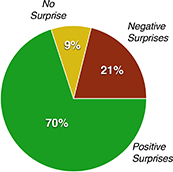
Earnings ESP (Expected Surprise Prediction) is a potent tool that investors can use to select better stocks for their portfolios. Earnings season can feel like a crapshoot sometimes. Even the 'best' companies are not immune to posting a negative surprise.
But there is a way to significantly tilt the odds in your favor of being in stocks that positively surprise, and being out of stocks that negatively surprise. And that's with Zacks Earnings ESP. While nothing is 100%, our time tested Earnings ESP has 70% accuracy in predicting which stocks will positively surprise.
Additional Resources
Top 5 Valuation Secrets
Apply the secrets of the Top 5 Valuation metrics in your own trading for the most profitable results. Take advantage of these amazing statistics and other strategies in the Research Wizard.
Due to inactivity, you will be signed out in approximately:



 View the Zacks #1 Rank List