We use cookies to understand how you use our site and to improve your experience.
This includes personalizing content and advertising.
By pressing "Accept All" or closing out of this banner, you consent to the use of all cookies and similar technologies and the sharing of information they collect with third parties.
You can reject marketing cookies by pressing "Deny Optional," but we still use essential, performance, and functional cookies.
In addition, whether you "Accept All," Deny Optional," click the X or otherwise continue to use the site, you accept our Privacy Policy and Terms of Service, revised from time to time.
You are being directed to ZacksTrade, a division of LBMZ Securities and licensed broker-dealer. ZacksTrade and Zacks.com are separate companies. The web link between the two companies is not a solicitation or offer to invest in a particular security or type of security. ZacksTrade does not endorse or adopt any particular investment strategy, any analyst opinion/rating/report or any approach to evaluating individual securities.
If you wish to go to ZacksTrade, click OK. If you do not, click Cancel.
A growing number of publicly traded companies are closely tied to the cryptocurrency ecosystem.
When Bitcoin rallies, crypto-linked companies often move even more sharply because their business models.
Among the top crypto stocks to buy now include Strategy Inc., Nvidia and Bitmine Immersion.
Investors seeking exposure to digital assets do not necessarily have to buy cryptocurrencies like Bitcoin or Ethereum directly. A growing number of publicly traded companies are closely tied to the cryptocurrency ecosystem, including exchanges, mining operations, software providers, and payment platforms that facilitate blockchain transactions.
This guide examines some of the most prominent crypto-related stocks, how their businesses connect to digital asset markets, the risks investors should understand, and how owning these equities compares with holding cryptocurrencies themselves.
Is Now a Good Time to Invest in Crypto Stocks?
Timing crypto stocks often depends on three major forces:
Bitcoin price momentum.
Regulatory clarity.
Institutional adoption (including ETFs).
When Bitcoin rallies, crypto-linked companies often move even more sharply because their business models provide operational leverage. Mining companies such as Marathon Digital Holdings (MARA) and Riot Platforms (RIOT), for instance, can see profits expand quickly when mining revenue rises while many operating costs remain relatively stable.
The same dynamic works in reverse during downturns. Crypto stocks frequently decline more sharply than Bitcoin itself, which means investors should expect significant volatility.
For long-term investors, periods of weakness in the cryptocurrency market may present opportunities. Valuations for crypto-related companies can compress during bear markets even as broader blockchain adoption continues to expand across financial services, technology infrastructure, and digital payments.
Below, we examine and rank leading crypto stocks using a blend of Zacks Rank signals, Style Scores, and core fundamental metrics to identify companies that may offer compelling long-term opportunities for patient investors.
This is our short term rating system that serves as a timeliness indicator for stocks over the next 1 to 3 months. How good is it? See rankings and related performance below.
The Zacks Industry Rank assigns a rating to each of the 265 X (Expanded) Industries based on their average Zacks Rank.
An industry with a larger percentage of Zacks Rank #1's and #2's will have a better average Zacks Rank than one with a larger percentage of Zacks Rank #4's and #5's.
The industry with the best average Zacks Rank would be considered the top industry (1 out of 265), which would place it in the top 1% of Zacks Ranked Industries. The industry with the worst average Zacks Rank (265 out of 265) would place in the bottom 1%.
The Zacks Sector Rank assigns a rating to each of the 16 Sectors based on their average Zacks Rank.
A sector with a larger percentage of Zacks Rank #1's and #2's will have a better average Zacks Rank than one with a larger percentage of Zacks Rank #4's and #5's.
The sector with the best average Zacks Rank would be considered the top sector (1 out of 16), which would place it in the top 1% of Zacks Ranked Sectors. The sector with the worst average Zacks Rank (16 out of 16) would place in the bottom 1%.
The Style Scores are a complementary set of indicators to use alongside the Zacks Rank. It allows the user to better focus on the stocks that are the best fit for his or her personal trading style.
The scores are based on the trading styles of Value, Growth, and Momentum. There's also a VGM Score ('V' for Value, 'G' for Growth and 'M' for Momentum), which combines the weighted average of the individual style scores into one score.
Value ScoreA
Growth ScoreA
Momentum ScoreA
VGM ScoreA
Within each Score, stocks are graded into five groups: A, B, C, D and F. As you might remember from your school days, an A, is better than a B; a B is better than a C; a C is better than a D; and a D is better than an F.
As an investor, you want to buy stocks with the highest probability of success. That means you want to buy stocks with a Zacks Rank #1 or #2, Strong Buy or Buy, which also has a Score of an A or a B in your personal trading style.
Zacks Earnings ESP (Expected Surprise Prediction) looks to find companies that have recently seen positive earnings estimate revision activity. The idea is that more recent information is, generally speaking, more accurate and can be a better predictor of the future, which can give investors an advantage in earnings season.
The technique has proven to be very useful for finding positive surprises. In fact, when combining a Zacks Rank #3 or better and a positive Earnings ESP, stocks produced a positive surprise 70% of the time, while they also saw 28.3% annual returns on average, according to our 10 year backtest.
Strategy is an enterprise analytics company that has effectively become a Bitcoin treasury vehicle via large, ongoing BTC accumulation. Latest results reiterated the playbook: 713,502 bitcoin held and a 22.8% “BTC Yield” for FY2025, keeping the stock linked to crypto upside while the software business helps offset costs. With multiple listed preferreds and an established issuance cadence, Strategy can keep compounding BTC per share if capital markets stay open.
Potential Risks
A sharp Bitcoin drawdown can pressure the equity, raise funding costs, and force more dilutive issuance. Earnings volatility from crypto marks can also whipsaw sentiment and complicate valuation.
Forecast
A Zacks Rank #1 (Strong Buy) is the strongest revisions signal, but Style Scores of F for Value, Growth, and Momentum imply weak factor support and higher volatility. The Price, Consensus & EPS Surprise chart shows a 2024–2025 surge followed by a steep 2026 pullback, while the 2026–2027 EPS path is choppy, keeping estimates bitcoin-dependent.
This is our short term rating system that serves as a timeliness indicator for stocks over the next 1 to 3 months. How good is it? See rankings and related performance below.
The Zacks Industry Rank assigns a rating to each of the 265 X (Expanded) Industries based on their average Zacks Rank.
An industry with a larger percentage of Zacks Rank #1's and #2's will have a better average Zacks Rank than one with a larger percentage of Zacks Rank #4's and #5's.
The industry with the best average Zacks Rank would be considered the top industry (1 out of 265), which would place it in the top 1% of Zacks Ranked Industries. The industry with the worst average Zacks Rank (265 out of 265) would place in the bottom 1%.
The Zacks Sector Rank assigns a rating to each of the 16 Sectors based on their average Zacks Rank.
A sector with a larger percentage of Zacks Rank #1's and #2's will have a better average Zacks Rank than one with a larger percentage of Zacks Rank #4's and #5's.
The sector with the best average Zacks Rank would be considered the top sector (1 out of 16), which would place it in the top 1% of Zacks Ranked Sectors. The sector with the worst average Zacks Rank (16 out of 16) would place in the bottom 1%.
The Style Scores are a complementary set of indicators to use alongside the Zacks Rank. It allows the user to better focus on the stocks that are the best fit for his or her personal trading style.
The scores are based on the trading styles of Value, Growth, and Momentum. There's also a VGM Score ('V' for Value, 'G' for Growth and 'M' for Momentum), which combines the weighted average of the individual style scores into one score.
Value ScoreA
Growth ScoreA
Momentum ScoreA
VGM ScoreA
Within each Score, stocks are graded into five groups: A, B, C, D and F. As you might remember from your school days, an A, is better than a B; a B is better than a C; a C is better than a D; and a D is better than an F.
As an investor, you want to buy stocks with the highest probability of success. That means you want to buy stocks with a Zacks Rank #1 or #2, Strong Buy or Buy, which also has a Score of an A or a B in your personal trading style.
Zacks Earnings ESP (Expected Surprise Prediction) looks to find companies that have recently seen positive earnings estimate revision activity. The idea is that more recent information is, generally speaking, more accurate and can be a better predictor of the future, which can give investors an advantage in earnings season.
The technique has proven to be very useful for finding positive surprises. In fact, when combining a Zacks Rank #3 or better and a positive Earnings ESP, stocks produced a positive surprise 70% of the time, while they also saw 28.3% annual returns on average, according to our 10 year backtest.
NVIDIA sells GPUs and networking used across AI and high-performance compute, with indirect crypto exposure through mining hardware demand and the infrastructure that powers exchanges and custody. In Q4 fiscal 2026, NVIDIA again posted record revenue and record Data Center sales, reinforcing that its earnings power is driven by secular AI buildouts rather than any single end-market.
Potential Risks
Export controls and geopolitics can disrupt product mix and visibility, especially around China-bound accelerators. Expectations are high, so any normalization in AI capex, pricing, or supply could trigger sharp multiple compression.
Forecast
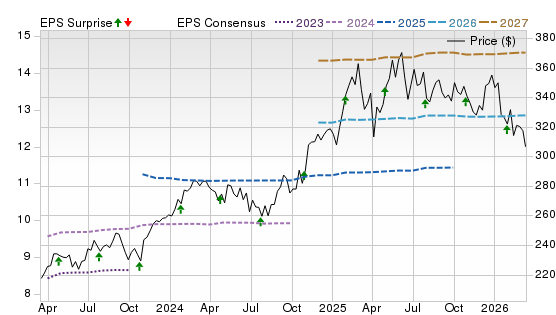
Zacks Rank #2 (Buy) with B scores for Growth and Momentum and D for Value points to improving earnings estimates and a favorable trading trend, even if the shares appear richly valued. The chart shows consensus EPS stair-stepping higher into 2026–2027 and a dense run of positive surprises, consistent with further revisions if Data Center demand stays tight.
This is our short term rating system that serves as a timeliness indicator for stocks over the next 1 to 3 months. How good is it? See rankings and related performance below.
The Zacks Industry Rank assigns a rating to each of the 265 X (Expanded) Industries based on their average Zacks Rank.
An industry with a larger percentage of Zacks Rank #1's and #2's will have a better average Zacks Rank than one with a larger percentage of Zacks Rank #4's and #5's.
The industry with the best average Zacks Rank would be considered the top industry (1 out of 265), which would place it in the top 1% of Zacks Ranked Industries. The industry with the worst average Zacks Rank (265 out of 265) would place in the bottom 1%.
The Zacks Sector Rank assigns a rating to each of the 16 Sectors based on their average Zacks Rank.
A sector with a larger percentage of Zacks Rank #1's and #2's will have a better average Zacks Rank than one with a larger percentage of Zacks Rank #4's and #5's.
The sector with the best average Zacks Rank would be considered the top sector (1 out of 16), which would place it in the top 1% of Zacks Ranked Sectors. The sector with the worst average Zacks Rank (16 out of 16) would place in the bottom 1%.
The Style Scores are a complementary set of indicators to use alongside the Zacks Rank. It allows the user to better focus on the stocks that are the best fit for his or her personal trading style.
The scores are based on the trading styles of Value, Growth, and Momentum. There's also a VGM Score ('V' for Value, 'G' for Growth and 'M' for Momentum), which combines the weighted average of the individual style scores into one score.
Value ScoreA
Growth ScoreA
Momentum ScoreA
VGM ScoreA
Within each Score, stocks are graded into five groups: A, B, C, D and F. As you might remember from your school days, an A, is better than a B; a B is better than a C; a C is better than a D; and a D is better than an F.
As an investor, you want to buy stocks with the highest probability of success. That means you want to buy stocks with a Zacks Rank #1 or #2, Strong Buy or Buy, which also has a Score of an A or a B in your personal trading style.
Zacks Earnings ESP (Expected Surprise Prediction) looks to find companies that have recently seen positive earnings estimate revision activity. The idea is that more recent information is, generally speaking, more accurate and can be a better predictor of the future, which can give investors an advantage in earnings season.
The technique has proven to be very useful for finding positive surprises. In fact, when combining a Zacks Rank #3 or better and a positive Earnings ESP, stocks produced a positive surprise 70% of the time, while they also saw 28.3% annual returns on average, according to our 10 year backtest.
Bitmine Immersion Technologies is a digital-asset operator shifting from mining toward treasury-style accumulation and staking, giving it direct exposure to crypto prices and yields. Its filings show revenue increasingly tied to staking and leasing rather than proprietary mining, a shift that can reduce capex intensity and diversify cash flow. Company updates also emphasize staked ETH growth and new staking infrastructure, which can act as catalysts when crypto sentiment improves.
Potential Risks
Reported results can be dominated by unrealized gains and losses on crypto holdings, and smaller-cap balance sheets can face sudden funding needs if token prices or staking economics turn. Thin liquidity and execution risk around treasury management can magnify drawdowns.
Forecast
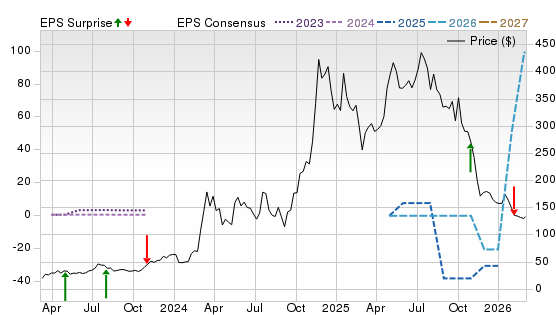
A Zacks Rank #2 is constructive, but F scores across Value, Growth, and Momentum suggest weak factor backing. The chart shows an extreme spike and sharp reversal, implying estimates and pricing can swing violently with crypto markets.
This is our short term rating system that serves as a timeliness indicator for stocks over the next 1 to 3 months. How good is it? See rankings and related performance below.
The Zacks Industry Rank assigns a rating to each of the 265 X (Expanded) Industries based on their average Zacks Rank.
An industry with a larger percentage of Zacks Rank #1's and #2's will have a better average Zacks Rank than one with a larger percentage of Zacks Rank #4's and #5's.
The industry with the best average Zacks Rank would be considered the top industry (1 out of 265), which would place it in the top 1% of Zacks Ranked Industries. The industry with the worst average Zacks Rank (265 out of 265) would place in the bottom 1%.
The Zacks Sector Rank assigns a rating to each of the 16 Sectors based on their average Zacks Rank.
A sector with a larger percentage of Zacks Rank #1's and #2's will have a better average Zacks Rank than one with a larger percentage of Zacks Rank #4's and #5's.
The sector with the best average Zacks Rank would be considered the top sector (1 out of 16), which would place it in the top 1% of Zacks Ranked Sectors. The sector with the worst average Zacks Rank (16 out of 16) would place in the bottom 1%.
The Style Scores are a complementary set of indicators to use alongside the Zacks Rank. It allows the user to better focus on the stocks that are the best fit for his or her personal trading style.
The scores are based on the trading styles of Value, Growth, and Momentum. There's also a VGM Score ('V' for Value, 'G' for Growth and 'M' for Momentum), which combines the weighted average of the individual style scores into one score.
Value ScoreA
Growth ScoreA
Momentum ScoreA
VGM ScoreA
Within each Score, stocks are graded into five groups: A, B, C, D and F. As you might remember from your school days, an A, is better than a B; a B is better than a C; a C is better than a D; and a D is better than an F.
As an investor, you want to buy stocks with the highest probability of success. That means you want to buy stocks with a Zacks Rank #1 or #2, Strong Buy or Buy, which also has a Score of an A or a B in your personal trading style.
Zacks Earnings ESP (Expected Surprise Prediction) looks to find companies that have recently seen positive earnings estimate revision activity. The idea is that more recent information is, generally speaking, more accurate and can be a better predictor of the future, which can give investors an advantage in earnings season.
The technique has proven to be very useful for finding positive surprises. In fact, when combining a Zacks Rank #3 or better and a positive Earnings ESP, stocks produced a positive surprise 70% of the time, while they also saw 28.3% annual returns on average, according to our 10 year backtest.
CME Group runs the leading U.S. futures and options marketplace, and its regulated Bitcoin and Ether derivatives give it a direct, volume-driven crypto lever. In the latest reported quarter, CME delivered strong profitability, while its broader rates, equities, and energy complex diversified the earnings base. Its crypto suite also posted record engagement in 2025, supported by institutions seeking compliant hedging venues as volatility persisted.
Potential Risks
Activity is ultimately tied to volatility and risk appetite; quieter markets can pressure volumes and transaction fees. Competition from other exchanges, plus shifting U.S. and global regulation around crypto derivatives, could also affect product mix.
Forecast
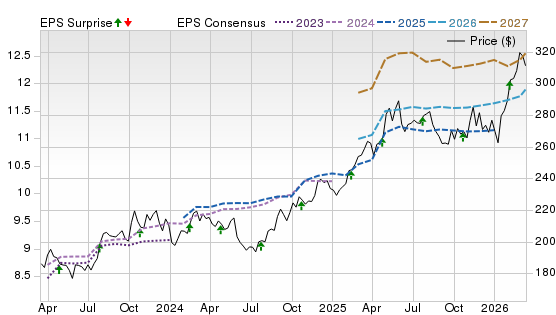
Zacks Rank #3 (Hold) suggests a neutral revisions setup, but the A Momentum score signals a supportive trend even with F scores for Value and Growth. The chart shows a steady uptrend and 2026–2027 consensus edging higher, with a pattern of mostly upside surprises, typically a setup for incremental estimate lifts if trading stays elevated.
This is our short term rating system that serves as a timeliness indicator for stocks over the next 1 to 3 months. How good is it? See rankings and related performance below.
The Zacks Industry Rank assigns a rating to each of the 265 X (Expanded) Industries based on their average Zacks Rank.
An industry with a larger percentage of Zacks Rank #1's and #2's will have a better average Zacks Rank than one with a larger percentage of Zacks Rank #4's and #5's.
The industry with the best average Zacks Rank would be considered the top industry (1 out of 265), which would place it in the top 1% of Zacks Ranked Industries. The industry with the worst average Zacks Rank (265 out of 265) would place in the bottom 1%.
The Zacks Sector Rank assigns a rating to each of the 16 Sectors based on their average Zacks Rank.
A sector with a larger percentage of Zacks Rank #1's and #2's will have a better average Zacks Rank than one with a larger percentage of Zacks Rank #4's and #5's.
The sector with the best average Zacks Rank would be considered the top sector (1 out of 16), which would place it in the top 1% of Zacks Ranked Sectors. The sector with the worst average Zacks Rank (16 out of 16) would place in the bottom 1%.
The Style Scores are a complementary set of indicators to use alongside the Zacks Rank. It allows the user to better focus on the stocks that are the best fit for his or her personal trading style.
The scores are based on the trading styles of Value, Growth, and Momentum. There's also a VGM Score ('V' for Value, 'G' for Growth and 'M' for Momentum), which combines the weighted average of the individual style scores into one score.
Value ScoreA
Growth ScoreA
Momentum ScoreA
VGM ScoreA
Within each Score, stocks are graded into five groups: A, B, C, D and F. As you might remember from your school days, an A, is better than a B; a B is better than a C; a C is better than a D; and a D is better than an F.
As an investor, you want to buy stocks with the highest probability of success. That means you want to buy stocks with a Zacks Rank #1 or #2, Strong Buy or Buy, which also has a Score of an A or a B in your personal trading style.
Zacks Earnings ESP (Expected Surprise Prediction) looks to find companies that have recently seen positive earnings estimate revision activity. The idea is that more recent information is, generally speaking, more accurate and can be a better predictor of the future, which can give investors an advantage in earnings season.
The technique has proven to be very useful for finding positive surprises. In fact, when combining a Zacks Rank #3 or better and a positive Earnings ESP, stocks produced a positive surprise 70% of the time, while they also saw 28.3% annual returns on average, according to our 10 year backtest.
Visa operates the world’s largest card network and is building crypto rails through stablecoin settlement and tokenization partnerships rather than taking coin price risk. The core business remains a compounding engine tied to global consumption and cross-border travel, and recent results showed continued growth in payments volume and transactions while calling out ongoing investment in its settlement layer. The company also launched USDC settlement for U.S. partners, scaling a pilot already processing meaningful volume.
Potential Risks
Regulatory and legal overhangs remain, including interchange-related litigation, and any consumer slowdown can hit volumes. Longer term, stablecoins could pressure parts of card economics if merchants and wallets route more flows off-network.
Forecast
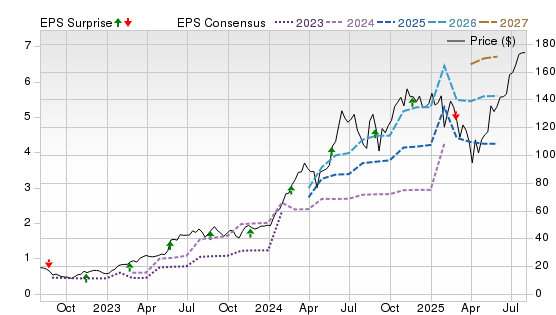
Zacks Rank #3 is a neutral signal, and Style Scores of D for Value and Momentum, and B for Growth imply fundamentals outpace recent price action. The chart shows consensus EPS trending higher into 2026–2027 with frequent beats, while the price line has been choppier, implying execution matters.
The Zacks Rank is a proprietary stock-rating model that uses trends in earnings estimate revisions and earnings-per-share (EPS) surprises to classify stocks into five groups: #1 (Strong Buy), #2 (Buy), #3 (Hold), #4 (Sell) and #5 (Strong Sell). The Zacks Rank is calculated through four primary factors related to earnings estimates: analysts' consensus on earnings estimate revisions, the magnitude of revision change, the upside potential and estimate surprise (or the degree in which earnings per share deviated from the previous quarter).
Zacks builds the data from 3,000 analysts at over 150 different brokerage firms. The average yearly gain for Zacks Rank #1 (Strong Buy) stocks is +23.62% per year from January, 1988, through June 2, 2025.
Selections for Best Crypto Stocks are based on the current top ranking stocks based on Zacks Indicator Score, Style Scores and fundamentals. All stocks have a daily trading volume of at least 100,000 shares and have a stock price of at least $5. All information is current as of market open, March 13, 2026.
Learn More About Crypto Stocks
What Are Crypto Stocks?
Crypto stocks are publicly traded companies whose revenue or growth prospects are meaningfully tied to cryptocurrency markets or blockchain technology.
Examples include:
Crypto exchanges like Coinbase Global (COIN).
Bitcoin miners like CleanSpark (CLSK).
Blockchain software firms like MicroStrategy (MSTR).
Some companies, like MicroStrategy, hold large Bitcoin reserves on their balance sheets, effectively functioning as leveraged Bitcoin proxies.
What Does It Mean to Invest in Crypto Stocks?
Buying crypto stocks means purchasing equity in companies that:
Facilitate crypto trading.
Mine digital assets.
Develop blockchain infrastructure.
Hold cryptocurrencies as corporate treasury assets.
Provide custody or payment services.
Unlike owning Bitcoin directly, investors gain exposure through traditional brokerage accounts, often within retirement plans like IRAs.
How Do Crypto Stocks Make Money?
Revenue models vary by category:
Exchanges earn trading fees and custody revenue (e.g., Coinbase).
Miners earn block rewards and transaction fees for validating blockchain transactions.
Treasury holders benefit when the value of Bitcoin held on their balance sheet rises.
Fintech platforms earn transaction or service fees tied to crypto activity.
For instance, Block Inc. (SQ) generates revenue through digital payments and crypto-related services inside its Cash App ecosystem.
What Industries Gain From Blockchain Besides Crypto Mining?
Blockchain technology extends beyond digital currencies. Beneficiaries include:
Financial services (settlement efficiency).
Supply chain management.
Digital identity verification.
Gaming and NFTs.
Smart contracts in real estate.
Companies such as NVIDIA (NVDA) also benefit indirectly, as crypto mining increases demand for advanced chips and GPUs.
Types of Crypto Stocks
Crypto Exchanges
Coinbase Global (COIN)
Bitcoin Miners
Marathon Digital Holdings (MARA)
Riot Platforms (RIOT)
Crypto Treasury Companies
MicroStrategy (MSTR)
Fintech with Crypto Exposure
Block Inc. (SQ)
PayPal (PYPL)
Semiconductor Providers
NVIDIA (NVDA)
Are There Crypto Dividend Stocks?
Most pure-play crypto firms reinvest cash into growth rather than paying dividends. Mining companies and exchanges typically do not offer regular dividends.
Are There Dividend-Paying Crypto Stocks?
Some diversified financial firms with limited crypto exposure may pay dividends, but investors seeking yield will generally find limited options in this sector.
Benefits, Risks and Safety of Crypto Stocks
Benefits of Crypto Stocks
Easier access through brokerage accounts.
Potential leverage to Bitcoin upside.
Regulatory oversight compared with offshore crypto platforms.
Eligibility for retirement accounts.
Risks of Crypto Stocks
Extreme price volatility.
Regulatory uncertainty.
High correlation to Bitcoin.
Operational risk (especially for miners).
Competitive fee pressure among exchanges.
Are Crypto Stocks Safer Than Crypto?
Crypto stocks trade on regulated exchanges and file audited financial statements, offering more transparency than many digital assets. However, they still carry substantial market risk and can be highly speculative.
Are Crypto Stocks Too Risky for Long-Term Investing?
That depends on risk tolerance. Some investors view blockchain infrastructure as a long-term growth theme, while others see it as cyclical and sentiment-driven.
Diversification is critical.
Why Are Crypto Stocks Crashing (or Surging)?
Crypto stocks typically move due to:
Bitcoin price swings.
ETF approvals or denials.
Regulatory news.
Earnings surprises.
Macro liquidity conditions.
They often amplify Bitcoin’s moves in both directions.
How Do Crypto Stocks Perform During Bull Markets vs Bear Markets?
Bull markets: Mining stocks and exchanges often outperform Bitcoin due to operating leverage.
Bear markets: Revenue declines can compress margins quickly, leading to steeper stock drawdowns.
What Regulations Could Affect Crypto Companies?
Key regulatory factors include:
SEC classification of tokens as securities.
Stablecoin oversight.
Anti-money laundering compliance.
ETF approvals.
Mining-related environmental policy.
Changes in regulatory stance can dramatically shift investor sentiment.
Crypto Stock Market Performance and Price Correlation
Which Crypto Stock Benefits Most if Bitcoin Goes Up?
Mining companies such as Marathon Digital Holdings (MARA) often show the highest beta to Bitcoin price increases.
Which Stocks Benefit the Most When Bitcoin Goes Up?
Miners (MARA, RIOT)
Treasury holders (MSTR)
Exchanges (COIN)
Each responds differently depending on cost structure and trading activity.
What Happens to Crypto Stocks After Bitcoin Halving?
Bitcoin halving reduces block rewards for miners. Historically:
Short term: Margin pressure for less efficient miners.
Long term: If Bitcoin price rises, stronger miners may benefit.
Will Bitcoin Halving Increase the Value of Crypto Stocks?
It can — but only if Bitcoin’s price appreciation offsets reduced mining rewards.
How Will Bitcoin ETF Approvals Impact Crypto Stocks?
Spot Bitcoin ETF approvals typically:
Increase institutional participation.
Improve sentiment.
Potentially shift trading volume from exchanges to ETFs.
Exchange stocks may see mixed effects, while miners often benefit from rising asset prices.
How to Select Crypto Stocks
Investors should evaluate:
Balance-sheet strength
Mining efficiency (cost per coin)
Revenue diversification
Regulatory exposure
Cash reserves
High debt can amplify both upside and downside.
How to Buy Crypto Stocks
You can purchase crypto stocks:
Through traditional brokerage accounts
Inside retirement accounts
Via ETFs focused on crypto or blockchain companies
No digital wallet required.
Which Crypto ETF Is Better: BTC ETF or Crypto Mining Stock ETF?
A spot Bitcoin ETF provides direct exposure to Bitcoin’s price.
A crypto mining ETF offers diversified exposure to companies like Marathon and Riot, potentially amplifying gains — and losses.
The better choice depends on whether you prefer:
Pure asset exposure (Bitcoin ETF).
Equity-based operational leverage (mining ETF).
Final Thoughts
The best crypto stocks give investors exposure to digital assets without requiring them to directly own cryptocurrencies. Companies such as Coinbase, Marathon Digital Holdings, Riot Platforms, MicroStrategy, Block Inc., PayPal, and NVIDIA offer varying degrees of sensitivity to Bitcoin and the broader pace of blockchain adoption.
These stocks can generate outsized returns during crypto bull markets, particularly when rising digital asset prices drive higher trading activity, mining profitability, or infrastructure demand. At the same time, their close connection to the cryptocurrency ecosystem means they often experience sharp swings during market downturns.
As with any emerging industry, careful stock selection, diversification, and disciplined risk management remain essential for investors considering exposure to the crypto economy through publicly traded companies.




 View the Zacks #1 Rank List


 Buy
Buy 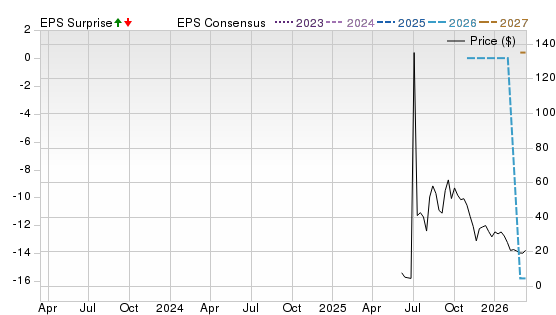
 Buy
Buy