What is SpaceX?
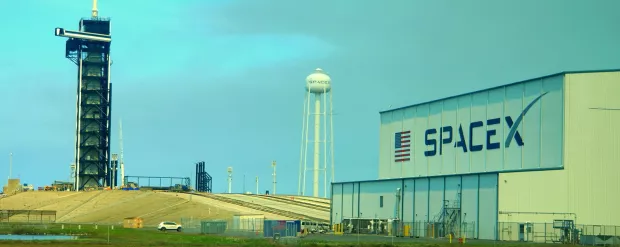
SpaceX, formally known as Space Exploration Technologies Corp., was founded in 2002 by Elon Musk with the goal of reducing space transportation costs and eventually enabling human settlement on Mars.
The company has transformed the aerospace industry through reusable rocket systems such as Falcon 9 and Falcon Heavy. SpaceX is also developing Starship, a fully reusable spacecraft designed for lunar missions, deep-space travel, and Mars colonization.
Beyond rockets, SpaceX operates Starlink, the satellite internet network that has become one of the company’s fastest-growing businesses. Starlink now serves millions of customers globally and is increasingly viewed as the financial engine behind the company’s soaring valuation.
SpaceX also works extensively with NASA, the U.S. military, and commercial customers for launch services and satellite deployments.
Is SpaceX profitable?
SpaceX is believed to be profitable, although the company does not publicly release full audited financial statements because it remains privately held.
Several reports suggest Starlink has become highly cash-flow positive, helping fund expensive projects like Starship development and satellite launches. Analysts increasingly view Starlink as the most valuable component of SpaceX because of its recurring subscription revenue and global scale.
However, profitability likely fluctuates due to the massive capital expenditures required for rocket launches, satellite manufacturing, AI investments, and infrastructure development.
Is SpaceX going IPO?
Media reports indicate SpaceX confidentially submitted draft IPO paperwork to the SEC in April 2026.
That marks a significant shift from Elon Musk’s previous stance. For years, Musk said SpaceX would not go public until Mars transportation systems became more mature.
The company’s growing capital needs may have changed the equation. SpaceX is investing heavily in:
- Starship development.
- Starlink satellite expansion.
- AI infrastructure after the xAI merger.
- Wireless spectrum acquisitions.
- Data center and communications networks.
A public listing would give SpaceX access to massive new funding sources while also providing liquidity for employees and early investors.
The IPO is expected to raise between $40 billion and $80 billion; if so, the offering would dwarf the previous IPO record set in 2020 by Saudi Aramco, which raised $29 billion.
When is the SpaceX IPO?
SpaceX has not officially confirmed a public IPO date, but media reports suggest the company is targeting a summer 2026 debut if market conditions remain favorable. According to those reports, SpaceX confidentially submitted a draft registration statement to the U.S. Securities and Exchange Commission (SEC) on April 1, 2026, marking the formal beginning of the IPO process. Confidential filings allow companies to work privately with regulators before publicly releasing financial statements and risk disclosures.
The Timeline: From Confidential Filing to Potential Launch
The reported April 1 filing started what could become one of the most closely watched IPO timelines in Wall Street history. Under SEC rules, the company’s S-1 filing would likely become public at least 15 days before the investor roadshow begins. Multiple reports have pointed to a potential June 8, 2026, roadshow kickoff, which could position SpaceX for a public listing around the summer solstice later in June.
The timing reflects what some analysts call the “Elon Factor” — Musk’s tendency to stage major launches and announcements around symbolic dates, high-profile events, and moments that maximize public attention. A summer IPO would also arrive during a period of renewed enthusiasm for artificial intelligence, defense technology, and next-generation infrastructure companies.
Why Musk Shifted From a Starlink IPO to a Full SpaceX IPO
For years, Elon Musk indicated that Starlink — not SpaceX itself — would eventually become the publicly traded company because the satellite internet division offered more stable and predictable cash flow than the rocket business. Musk repeatedly said SpaceX would remain private until missions to Mars became more economically sustainable.
That strategy appears to have changed dramatically this year. Instead of spinning off Starlink separately, reports now suggest investors may get a “Total SpaceX” IPO that combines several of Musk’s biggest growth platforms into one company. That structure would include:
- Starlink’s global satellite internet network.
- SpaceX launch and defense operations.
- Starship development.
- xAI and artificial intelligence infrastructure tied to satellite communications and autonomous systems.
Analysts believe the combined structure could support the company’s enormous reported valuation target of up to $1.75 trillion because investors would effectively be buying exposure to multiple industries at once, including aerospace, telecom, defense, AI, and cloud infrastructure.
When will the SpaceX S-1 be public?
Under SEC rules, confidential IPO filings generally become public at least 15 days before the roadshow begins.
If SpaceX pursues a June 2026 IPO timeline, investors could potentially see the S-1 registration statement sometime in May 2026.
The S-1 filing will likely include:
- Revenue figures.
- Profitability metrics.
- Risk disclosures.
- Share structure details.
- Information about Starlink and xAI integration.
- Insider ownership percentages.
What should investors do right now?
Investors considering the IPO may want to:
- Monitor SEC filings and news updates.
- Review valuation assumptions carefully.
- Compare SpaceX to other high-growth technology and aerospace companies.
- Understand the risks tied to Musk-led businesses.
- Consider whether buying immediately after the IPO fits their risk tolerance.
Historically, many high-profile IPOs experience significant volatility during their first year of trading.
Valuation Deep Dive: Is $1.75 Trillion Realistic?
The reported valuation range of $1.75 trillion to $2 trillion would place SpaceX among the world’s most valuable companies.
Supporters argue the valuation reflects:
- Dominance in commercial launch services.
- Starlink’s global growth potential.
- AI integration through xAI.
- Long-term defense and government contracts.
- Future space infrastructure opportunities.
Skeptics argue the valuation may be pricing in decades of future success before many projects become commercially proven.
Some analysts have compared the valuation to a combination of:
- A telecom company.
- A defense contractor.
- A launch provider.
- An AI platform.
- A cloud infrastructure business.
That makes SpaceX unusually difficult to value using traditional financial models.
Does the xAI merger make SpaceX overvalued?
SpaceX’s merger with xAI added another layer of complexity to valuation discussions. Reports suggest the combined entity could be worth over $1.25 trillion before IPO premiums.
Bullish investors believe AI integration could strengthen:
- Satellite data processing.
- Autonomous spacecraft systems.
- Communications infrastructure.
- Robotics and defense applications.
Critics argue the merger may blur the financial picture by combining multiple speculative businesses under one umbrella.
There are also governance concerns. Some pension funds have criticized the proposed voting structure and Elon Musk’s level of control over the company.
What is the Pre IPO SpaceX Price Prediction?
Pre-IPO pricing estimates vary widely depending on:
- Secondary market demand.
- Share availability.
- Institutional appetite.
- Final IPO share count.
Private market platforms have seen strong investor demand for SpaceX shares for years, often at steep premiums. Some analysts expect the IPO to price aggressively, given the intense public interest surrounding Musk-led companies.
Still, predicting the opening trading price is difficult because IPO shares are typically allocated primarily to institutional investors before retail investors gain access.
Is it worth buying SpaceX when it goes IPO?
That depends largely on an investor’s risk tolerance and time horizon.
Potential bullish factors include:
- Market leadership in launch services.
- Rapid Starlink growth.
- Long-term space economy expansion.
- Government partnerships.
- AI and communications infrastructure opportunities.
Potential risks include:
- Extremely high valuation.
- Heavy capital spending.
- Regulatory challenges.
- Launch failures.
- Dependence on Elon Musk.
- Competition from other aerospace and telecom firms.
Some investors may prefer waiting until after the initial volatility settles before building a position.
How to Buy SpaceX Stock Pre and Post IPO
Once SpaceX becomes public, shares would likely trade on a major U.S. exchange such as Nasdaq.
Investors could potentially buy shares through:
- Brokerage accounts.
- IPO access platforms.
- ETFs holding SpaceX after listing.
Can retail investors buy SpaceX pre-IPO?
Retail investors generally cannot buy shares directly from private companies before an IPO unless they qualify as accredited investors.
However, some secondary marketplaces offer limited exposure to private shares, including:
- Forge Global
- Equity Zen
- Hive
These platforms typically involve:
- Higher minimum investments.
- Limited liquidity.
- Complex fees.
- Regulatory restrictions.
Which ETFs have the most exposure to SpaceX?
Because SpaceX remains private, direct ETF exposure is limited.
However, some funds have indirect or secondary exposure through private market holdings or related companies. Investors often monitor:
- Space-focused ETFs.
- Innovation-themed ETFs.
- Venture capital-style funds.
ETFs that have SpaceX pre-IPO holdings include:
- ERShares Private-Public Crossover ETF (XOVR)
- Baron First Principles ETF (RONB)
- Roundhill Space & Technology ETF (NASA)
- KraneShares Artificial Intelligence & Technology ETF (AGIX)
Space-focused ETFs that indirectly could benefit from a SpaceX boom include:
- Procure Space ETF (UFO)
- ARK Space & Defense Innovation ETF (ARKX)
Investors should review holdings carefully because exposure levels can change frequently.
Alternative stocks to SpaceX
Investors seeking exposure to the space economy may also consider:
- Rocket Lab Corporation (RKLB)
- Iridium Communications (IRDM)
- Viasat (VSAT)
- AST SpaceMobile (ASTS)
- EchoStar (SATS)
Several analysts believe the SpaceX IPO could increase investor interest across the entire commercial space sector.
Frequently asked questions about SpaceX IPO
What is the official SpaceX IPO date?
SpaceX has not officially announced a public IPO date yet. Reports suggest a possible June 2026 timeline.
Will Starlink have its own IPO?
Elon Musk previously suggested Starlink could eventually become a separate public company once its cash flow became more predictable. No standalone Starlink IPO has been officially announced.
How much will one share of SpaceX cost?
The IPO share price has not been disclosed publicly. Pricing will likely depend on final valuation, share count, and institutional demand.
Can I buy SpaceX stock on Robinhood yet?
No. SpaceX shares are not currently available for public trading because the company remains privately held.
If the IPO occurs, shares may eventually become available through platforms like Robinhood and other brokerage firms.
Does SpaceX own xAI?
Reports indicate SpaceX merged with xAI earlier in 2026 as part of a broader restructuring of Elon Musk’s business empire.
What are the risks of the SpaceX IPO?
Major risks may include:
- High valuation expectations.
- Rocket launch failures.
- Regulatory issues.
- Satellite competition.
- Political and defense risks.
- Governance concerns tied to Musk’s control structure.
What is the 15-day Nasdaq rule for SpaceX?
Under SEC confidential filing rules, companies must publicly release IPO documents at least 15 days before starting their investor roadshow.
That means investors may gain access to detailed financial disclosures shortly before the IPO process formally begins.




 View the Zacks #1 Rank List