Key Takeaways
- Dividend stocks are strong choice for investors looking for both growth and consistent income.
- Long-term investors need to beware of stocks with high-dividend yields, yet poor financial fundamentals.
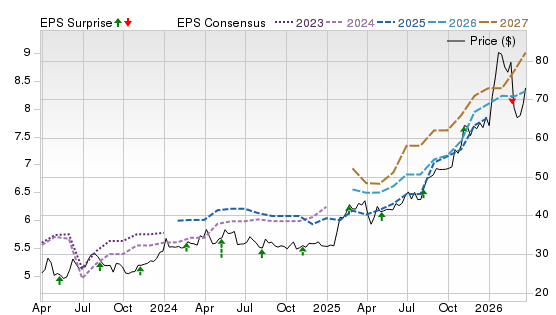
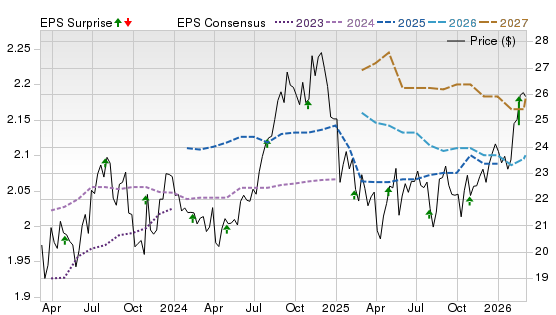
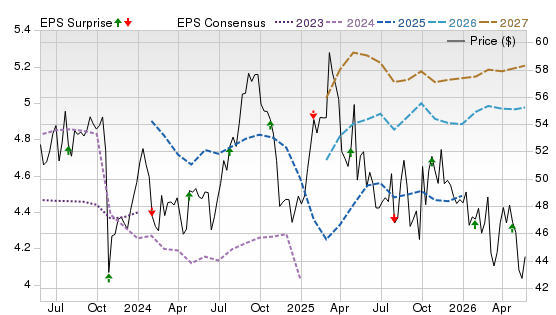
- Some high-ranking dividend stocks for reliable income include Grupo Cibest, Ultrapar and Kite Realty Group.
Dividend stocks share a slice of profits with investors, delivering steady cash that can help meet liquidity needs and temper portfolio swings when markets are choppy. Over time, reinvested payouts have been a major driver of total return—quietly compounding even when prices stall.
Picking the right payers is the hard part. A high yield alone can be a warning sign; “dividend traps” often pair eye-catching payouts with weak balance sheets or eroding cash flows that invite cuts. The better approach is to focus on durability: moderate payout ratios, consistent free cash generation, prudent leverage, and a record of maintaining or raising dividends.
With that framework, we highlight dividend stocks that combine sustainable income with reasonable entry point. The goal is simple: reliable, repeatable income from businesses built to keep paying through the cycle.
Methodology
The Zacks Rank is a proprietary stock-rating model that uses trends in earnings estimate revisions and earnings-per-share (EPS) surprises to classify stocks into five groups: #1 (Strong Buy), #2 (Buy), #3 (Hold), #4 (Sell) and #5 (Strong Sell). The Zacks Rank is calculated through four primary factors related to earnings estimates: analysts' consensus on earnings estimate revisions, the magnitude of revision change, the upside potential and estimate surprise (or the degree in which earnings per share deviated from the previous quarter).
Zacks builds the data from 3,000 analysts at over 150 different brokerage firms. The average yearly gain for Zacks Rank #1 (Strong Buy) stocks is +23.80% per year from Jan. 1, 1988, through Aug. 3, 2026.
For this list, only companies trading on the New York Stock Exchange or NASDAQ with a dividend yield of 3.5% or higher were included. We also only evaluated stock with a low debt-to-equity ratio, as well as a conservative payout ratio and dividend growth. Only stocks with a Zacks Rank #3 (Hold) or higher were considered. All information is current as of market open, Aug. 27, 2026.
Guide to Best Dividend Stocks
What Are Dividend Stocks?
Dividend stocks are shares of companies that return a portion of their earnings to shareholders on a regular basis. Rather than relying solely on stock price appreciation, dividend investors benefit from this income stream, which can complement long-term growth.
How Do Dividend Stocks Work?
Corporations that generate surplus cash may decide to share part of it with shareholders through dividends. The firm’s board will declare a dividend — often expressed as a dollar amount per share — and set a record date to identify eligible shareholders. On the payment date, the company sends the dividend (in cash or additional shares) to investors who held the stock on the record date.
Dividends typically come out of a company’s profits or free cash flow. To continue paying dividends, companies need consistent earnings, prudent capital allocation, and manageable debt levels.
How Often Do Dividend Stocks Pay in a Year?
Most U.S. dividend-paying companies distribute dividends quarterly (four times per year). Some firms choose semiannual or annual payments, depending on business norms or cash flow timing. What matters more than the frequency is consistency — companies that maintain or increase their dividend over time tend to instill more investor confidence.
Keep up on the latest Dividend news: Zacks Dividend Calendar
Benefits and Risks of Dividend Stocks
Benefits:
- Supplemental income stream — Dividends provide cash flow even if the stock price is flat or in decline.
- Total return boost — Over long horizons, dividends have historically contributed a meaningful share of returns. (Many capital markets analyses show dividends often account for 30–50% of total equity returns.)
- Downside cushion — In volatile markets, dividend income helps offset capital losses.
- Sign of stability — Companies that consistently pay or increase dividends often have disciplined management and stable cash flows.
Risks:
- Dividend cuts — If a company hits a rough patch, it might reduce or suspend dividends, which often leads to share price declines.
- Limited growth reinvestment — High dividend payments may reduce funds available for expansion or innovation.
- Interest rate competition — When bond yields rise, dividend stocks (especially those with modest growth prospects) may look less attractive in comparison.
- Tax drag — Dividends are taxed (depending on account structure and holding period), which can eat into net return.
Dividend Stock ETFs vs Individual Stocks
When considering dividend exposure, investors have two main paths:
- Individual dividend stocks: You pick specific companies you trust to pay and grow dividends. This gives you direct control over stocks and allows targeted allocation to sectors or themes you favor.
- Dividend ETFs / mutual funds: Pools of dividend-paying stocks maintained by professional managers. These provide instant diversification, reduce individual stock risk, and simplify portfolio management.
Pros of Dividend ETFs
- Automatic diversification lowers the risk of a single holding failing.
- Fund managers monitor holdings and rebalance.
- Easier to scale and maintain, especially for smaller portfolios.
Cons of Dividend ETFs vs Individual Stocks
- Yields tend to be diluted by including lower-yielding names.
- Less control over specific holdings or sector weightings.
- Management fees may erode yields over time.
Many investors use a hybrid strategy: core allocation via a dividend ETF (for stability) supplemented by hand-picked individual dividend stocks for yield or growth.
How to Choose the Best Dividend Stocks
Not all dividend stocks are created equal. Here’s what to look for when evaluating candidates:
Dividend Yield
Yield = (Annual Dividend per Share) ÷ (Current Share Price). A moderate, well-supported yield (say 2 %–6 %, depending on sector) can be healthy, while extremely high yields often signal trouble (e.g. deep decline in share price)
Dividend Payout Ratio
This ratio shows what percentage of a company’s earnings are paid out as dividends. If a company distributes too much (e.g. > 80–90 %), it may lack flexibility to weather downturns. More conservative ratios (e.g. 30–60 %) often indicate room for future increases or a buffer in tough times.
Dividend Growth History
Look for firms that have steadily raised their dividends over years. A consistent upward trend signals confidence in future earnings. Dividend “Aristocrats” — firms in the S&P 500 that have raised dividends for at least 25 consecutive years — are often viewed as safer dividend picks.
Company Financial Health
Examine fundamentals:
- Free cash flow and cash flow stability
- Debt load and interest coverage
- Profit margins
- Growth prospects
- Competitive advantage (moat)
A company with healthy cash flow and manageable debt is more likely to sustain and grow dividends.
Sector and Market Trends
Some sectors are inherently more dividend-friendly (utilities, consumer staples, real estate, energy) because they generate steady cash flows. Others (like high-growth tech) may pay little to none in dividends as they reinvest heavily.
Also consider macro conditions — for example, rising interest rates, inflation pressures, regulatory risks — which may disproportionately affect certain sectors.
Tips for Building a Dividend Portfolio
- Start with a foundation of blue-chip dividend stocks — Established companies with strong balance sheets and long payout histories.
- Diversify across sectors — Avoid being overly concentrated in one industry (e.g. energy or REITs).
- Reinvest dividends — Using a Dividend Reinvestment Plan (DRIP) can compound returns over time.
- Allocate some portion to growth or higher-yield names, if your risk tolerance allows — but don’t let them dominate.
- Review and rebalance periodically — Monitor fundamentals, payout changes, valuation shifts, and sector dynamics.
- Use metrics and screening tools — Apply filters (yield, payout ratios, growth, fundamentals) to narrow your universe, then do deeper research.
Mistakes to Avoid about Dividend Stocks
- Chasing the highest yield blindly — extremely high yields can indicate a distressed company or impending cuts.
- Ignoring payout sustainability — yield without coverage (earnings, cash flow) is precarious.
- Overconcentration in one stock or sector — a dividend cut or sector downturn can deeply hurt.
- Neglecting growth potential — pure high-yield stocks may underperform in growth cycles.
- Forgetting taxes and fees — dividends taxed or fees eroding yield can reduce net returns.
Also, be cautious if yield spikes because of falling share price — that could be a warning sign rather than opportunity.
Frequently Asked Questions About Dividend Stocks
How are dividends taxed?
In the U.S., qualified dividends (if holding periods are met) are taxed at long-term capital gains rates (0 %, 15 %, or 20 %, depending on income bracket). Non-qualified dividends are taxed at ordinary income rates. Additionally, when you sell shares, capital gains taxes may apply to the appreciation portion.
Are dividend stocks good for retirees?
Yes. They can provide a predictable stream of income and may buffer volatility. However, retirees should emphasize safety and sustainability — favor those with strong balance sheets, stable business models, and moderate payout ratios. Also, be aware of tax effects and inflation.
What’s a good dividend yield?
There’s no one “ideal” yield. Many investors view 2 %–6 % as reasonable, depending on the sector and interest rate environment. Yields well above that range warrant extra scrutiny — high yields often come with higher risk.
Are dividend stocks safe for beginners?
They can be, especially when you start with well-known, financially sound dividend payers and diversify. The income cushion helps offset downside risk. But beginners must still research fundamentals, avoid yield traps, and avoid overconcentration.
Read more: Check out today’s list of Best Stocks to Buy Now.




 View the Zacks #1 Rank List


 Strong Buy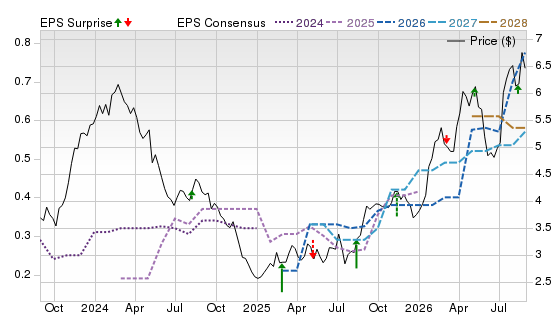












Zacks' 7 Best Strong Buy Stocks (New Research Report)
Valued at $99, click below to receive our just-released report
▸ Click Here, It's Really Freepredicting the 7 stocks that will soar highest in the coming month.