We use cookies to understand how you use our site and to improve your experience.
This includes personalizing content and advertising.
By pressing "Accept All" or closing out of this banner, you consent to the use of all cookies and similar technologies and the sharing of information they collect with third parties.
You can reject marketing cookies by pressing "Deny Optional," but we still use essential, performance, and functional cookies.
In addition, whether you "Accept All," Deny Optional," click the X or otherwise continue to use the site, you accept our Privacy Policy and Terms of Service, revised from time to time.
You are being directed to ZacksTrade, a division of LBMZ Securities and licensed broker-dealer. ZacksTrade and Zacks.com are separate companies. The web link between the two companies is not a solicitation or offer to invest in a particular security or type of security. ZacksTrade does not endorse or adopt any particular investment strategy, any analyst opinion/rating/report or any approach to evaluating individual securities.
If you wish to go to ZacksTrade, click OK. If you do not, click Cancel.
Nuclear energy has come roaring back as countries and corporations seek reliable, low-carbon power options.
The AI explosion and the data centers required are a big part of nuclear energy renaissance.
Top nuclear energy stocks right now include BWX Technologies, Denison Mines and Rolls-Royce.
Nuclear energy is stepping back into the spotlight as governments and corporations look for reliable, low-carbon power that can run around the clock. From life-extending existing reactors to backing next-generation technologies like small modular reactors (SMRs), policy support is strengthening across the globe. For investors, that creates opportunities spanning established utilities, advanced reactor developers, and specialized nuclear technology firms.
Is Now a Good Time to Invest in Nuclear Energy Stocks?
Several signals suggest the industry may be at an inflection point. Countries are approving new reactor projects, extending operating licenses, and committing capital to SMR commercialization to support grid stability and decarbonization goals. At the same time, power-hungry customers such as AI data centers and large industrial users are locking in long-term nuclear supply contracts, improving visibility into future cash flows.
That said, nuclear investing rewards patience. Long development timelines, regulatory complexity, and project-execution risks mean results can vary widely from company to company.
Below, we analyze and rank the best nuclear stocks using a blend of Zacks Rank signals, Style Scores, and fundamentals to highlight compelling opportunities today. (To see a full list of nuclear energy stocks, visit our Nuclear Energy thematic stock screen).
This is our short term rating system that serves as a timeliness indicator for stocks over the next 1 to 3 months. How good is it? See rankings and related performance below.
The Zacks Industry Rank assigns a rating to each of the 265 X (Expanded) Industries based on their average Zacks Rank.
An industry with a larger percentage of Zacks Rank #1's and #2's will have a better average Zacks Rank than one with a larger percentage of Zacks Rank #4's and #5's.
The industry with the best average Zacks Rank would be considered the top industry (1 out of 265), which would place it in the top 1% of Zacks Ranked Industries. The industry with the worst average Zacks Rank (265 out of 265) would place in the bottom 1%.
The Zacks Sector Rank assigns a rating to each of the 16 Sectors based on their average Zacks Rank.
A sector with a larger percentage of Zacks Rank #1's and #2's will have a better average Zacks Rank than one with a larger percentage of Zacks Rank #4's and #5's.
The sector with the best average Zacks Rank would be considered the top sector (1 out of 16), which would place it in the top 1% of Zacks Ranked Sectors. The sector with the worst average Zacks Rank (16 out of 16) would place in the bottom 1%.
The Style Scores are a complementary set of indicators to use alongside the Zacks Rank. It allows the user to better focus on the stocks that are the best fit for his or her personal trading style.
The scores are based on the trading styles of Value, Growth, and Momentum. There's also a VGM Score ('V' for Value, 'G' for Growth and 'M' for Momentum), which combines the weighted average of the individual style scores into one score.
Value ScoreA
Growth ScoreA
Momentum ScoreA
VGM ScoreA
Within each Score, stocks are graded into five groups: A, B, C, D and F. As you might remember from your school days, an A, is better than a B; a B is better than a C; a C is better than a D; and a D is better than an F.
As an investor, you want to buy stocks with the highest probability of success. That means you want to buy stocks with a Zacks Rank #1 or #2, Strong Buy or Buy, which also has a Score of an A or a B in your personal trading style.
Zacks Earnings ESP (Expected Surprise Prediction) looks to find companies that have recently seen positive earnings estimate revision activity. The idea is that more recent information is, generally speaking, more accurate and can be a better predictor of the future, which can give investors an advantage in earnings season.
The technique has proven to be very useful for finding positive surprises. In fact, when combining a Zacks Rank #3 or better and a positive Earnings ESP, stocks produced a positive surprise 70% of the time, while they also saw 28.3% annual returns on average, according to our 10 year backtest.
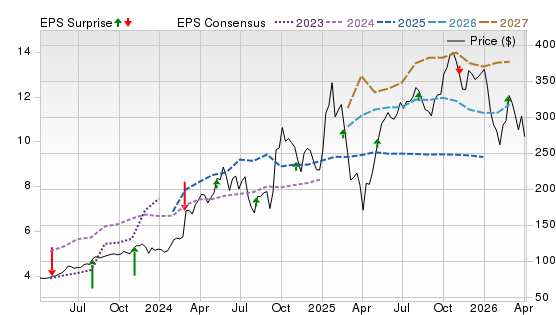
BWX Technologies supplies nuclear components, fuel and services for U.S. Navy reactors and commercial nuclear systems. In Q4 2025, BWXT beat expectations, grew EPS and revenue, and ended 2025 with backlog up 50% to $7.3 billion, driven by naval propulsion, special materials and commercial nuclear awards. The 2026 guidance called for higher earnings and FCF, underscoring strong demand.
Potential Risks
Customer concentration and contract timing can create lumpiness, while regulatory oversight and execution risk rise as BWXT expands capacity. After a rally, any guidance stumble could trigger multiple compressions.
Forecast
A Zacks Rank #1 (Strong Buy) signals favorable estimate revisions. The Value Score of F suggests the stock isn’t cheap, Momentum C is middling, and Growth B does most of the work supporting the setup. The chart shows 2026-2027 consensus trending higher with more recent upside surprises, consistent with the prevailing uptrend.
This is our short term rating system that serves as a timeliness indicator for stocks over the next 1 to 3 months. How good is it? See rankings and related performance below.
The Zacks Industry Rank assigns a rating to each of the 265 X (Expanded) Industries based on their average Zacks Rank.
An industry with a larger percentage of Zacks Rank #1's and #2's will have a better average Zacks Rank than one with a larger percentage of Zacks Rank #4's and #5's.
The industry with the best average Zacks Rank would be considered the top industry (1 out of 265), which would place it in the top 1% of Zacks Ranked Industries. The industry with the worst average Zacks Rank (265 out of 265) would place in the bottom 1%.
The Zacks Sector Rank assigns a rating to each of the 16 Sectors based on their average Zacks Rank.
A sector with a larger percentage of Zacks Rank #1's and #2's will have a better average Zacks Rank than one with a larger percentage of Zacks Rank #4's and #5's.
The sector with the best average Zacks Rank would be considered the top sector (1 out of 16), which would place it in the top 1% of Zacks Ranked Sectors. The sector with the worst average Zacks Rank (16 out of 16) would place in the bottom 1%.
The Style Scores are a complementary set of indicators to use alongside the Zacks Rank. It allows the user to better focus on the stocks that are the best fit for his or her personal trading style.
The scores are based on the trading styles of Value, Growth, and Momentum. There's also a VGM Score ('V' for Value, 'G' for Growth and 'M' for Momentum), which combines the weighted average of the individual style scores into one score.
Value ScoreA
Growth ScoreA
Momentum ScoreA
VGM ScoreA
Within each Score, stocks are graded into five groups: A, B, C, D and F. As you might remember from your school days, an A, is better than a B; a B is better than a C; a C is better than a D; and a D is better than an F.
As an investor, you want to buy stocks with the highest probability of success. That means you want to buy stocks with a Zacks Rank #1 or #2, Strong Buy or Buy, which also has a Score of an A or a B in your personal trading style.
Zacks Earnings ESP (Expected Surprise Prediction) looks to find companies that have recently seen positive earnings estimate revision activity. The idea is that more recent information is, generally speaking, more accurate and can be a better predictor of the future, which can give investors an advantage in earnings season.
The technique has proven to be very useful for finding positive surprises. In fact, when combining a Zacks Rank #3 or better and a positive Earnings ESP, stocks produced a positive surprise 70% of the time, while they also saw 28.3% annual returns on average, according to our 10 year backtest.
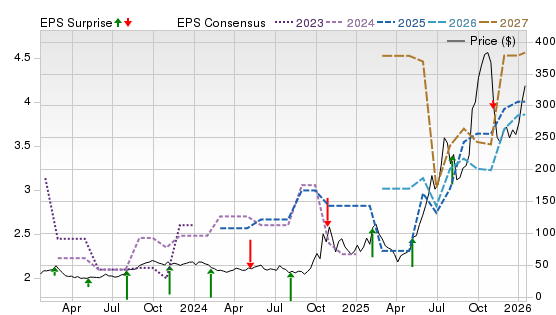
Denison Mines is a uranium developer with direct nuclear-fuel leverage through its Wheeler River Phoenix in-situ recovery project. In its last reported period, Denison took a de-risking step by reaching a final investment decision after receiving the last federal construction approvals. Management also noted engineering nearing 90% and highlighted financing support, positioning Phoenix as a new uranium source targeted for first production by mid-2028.
Potential Risks
Inflation, execution hiccups, or added regulatory conditions could push timelines and returns. The stock can swing with uranium prices and risk appetite, and the financing structure can be dilutive.
Forecast
A Zacks Rank #1 reflects positive revisions, but Style Scores of F for Value and Growth and D for Momentum suggest the market needs clearer earnings visibility. The chart shows 2026 estimates drifting lower and 2027 only modestly improving, with an uneven surprise pattern alongside a volatile price move.
This is our short term rating system that serves as a timeliness indicator for stocks over the next 1 to 3 months. How good is it? See rankings and related performance below.
The Zacks Industry Rank assigns a rating to each of the 265 X (Expanded) Industries based on their average Zacks Rank.
An industry with a larger percentage of Zacks Rank #1's and #2's will have a better average Zacks Rank than one with a larger percentage of Zacks Rank #4's and #5's.
The industry with the best average Zacks Rank would be considered the top industry (1 out of 265), which would place it in the top 1% of Zacks Ranked Industries. The industry with the worst average Zacks Rank (265 out of 265) would place in the bottom 1%.
The Zacks Sector Rank assigns a rating to each of the 16 Sectors based on their average Zacks Rank.
A sector with a larger percentage of Zacks Rank #1's and #2's will have a better average Zacks Rank than one with a larger percentage of Zacks Rank #4's and #5's.
The sector with the best average Zacks Rank would be considered the top sector (1 out of 16), which would place it in the top 1% of Zacks Ranked Sectors. The sector with the worst average Zacks Rank (16 out of 16) would place in the bottom 1%.
The Style Scores are a complementary set of indicators to use alongside the Zacks Rank. It allows the user to better focus on the stocks that are the best fit for his or her personal trading style.
The scores are based on the trading styles of Value, Growth, and Momentum. There's also a VGM Score ('V' for Value, 'G' for Growth and 'M' for Momentum), which combines the weighted average of the individual style scores into one score.
Value ScoreA
Growth ScoreA
Momentum ScoreA
VGM ScoreA
Within each Score, stocks are graded into five groups: A, B, C, D and F. As you might remember from your school days, an A, is better than a B; a B is better than a C; a C is better than a D; and a D is better than an F.
As an investor, you want to buy stocks with the highest probability of success. That means you want to buy stocks with a Zacks Rank #1 or #2, Strong Buy or Buy, which also has a Score of an A or a B in your personal trading style.
Zacks Earnings ESP (Expected Surprise Prediction) looks to find companies that have recently seen positive earnings estimate revision activity. The idea is that more recent information is, generally speaking, more accurate and can be a better predictor of the future, which can give investors an advantage in earnings season.
The technique has proven to be very useful for finding positive surprises. In fact, when combining a Zacks Rank #3 or better and a positive Earnings ESP, stocks produced a positive surprise 70% of the time, while they also saw 28.3% annual returns on average, according to our 10 year backtest.
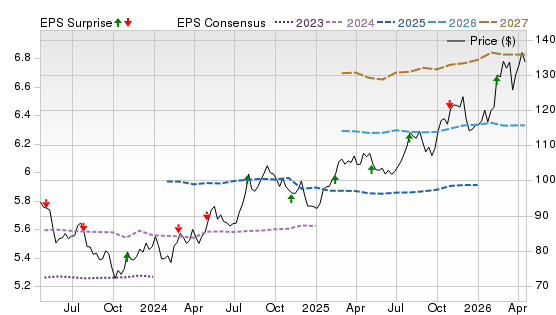
Rolls-Royce is an aerospace group with nuclear exposure via U.K. submarine-reactor propulsion and its Small Modular Reactors venture. In the last reported period, the company delivered higher underlying operating profit and FCF, ended with robust net cash, and issued strong 2026 profit and cash guidance alongside a multi-year share buyback. The nuclear angle adds longer-dated upside, with Rolls-Royce SMR selected for the U.K.’s first SMR Programme and advancing partnerships overseas.
Potential Risks
Civil Aerospace and Power Systems still drive earnings, leaving the stock sensitive to flying hours, supply chain and power demand. SMRs remain pre-commercial and exposed to licensing, cost and political risk.
Forecast
A Zacks Rank #2 (Buy), Momentum A and Growth B fit the trend, while Value C implies less margin for error. The chart shows 2026-2027 consensus stepping higher with few downside surprises, consistent with the sustained price climb.
This is our short term rating system that serves as a timeliness indicator for stocks over the next 1 to 3 months. How good is it? See rankings and related performance below.
The Zacks Industry Rank assigns a rating to each of the 265 X (Expanded) Industries based on their average Zacks Rank.
An industry with a larger percentage of Zacks Rank #1's and #2's will have a better average Zacks Rank than one with a larger percentage of Zacks Rank #4's and #5's.
The industry with the best average Zacks Rank would be considered the top industry (1 out of 265), which would place it in the top 1% of Zacks Ranked Industries. The industry with the worst average Zacks Rank (265 out of 265) would place in the bottom 1%.
The Zacks Sector Rank assigns a rating to each of the 16 Sectors based on their average Zacks Rank.
A sector with a larger percentage of Zacks Rank #1's and #2's will have a better average Zacks Rank than one with a larger percentage of Zacks Rank #4's and #5's.
The sector with the best average Zacks Rank would be considered the top sector (1 out of 16), which would place it in the top 1% of Zacks Ranked Sectors. The sector with the worst average Zacks Rank (16 out of 16) would place in the bottom 1%.
The Style Scores are a complementary set of indicators to use alongside the Zacks Rank. It allows the user to better focus on the stocks that are the best fit for his or her personal trading style.
The scores are based on the trading styles of Value, Growth, and Momentum. There's also a VGM Score ('V' for Value, 'G' for Growth and 'M' for Momentum), which combines the weighted average of the individual style scores into one score.
Value ScoreA
Growth ScoreA
Momentum ScoreA
VGM ScoreA
Within each Score, stocks are graded into five groups: A, B, C, D and F. As you might remember from your school days, an A, is better than a B; a B is better than a C; a C is better than a D; and a D is better than an F.
As an investor, you want to buy stocks with the highest probability of success. That means you want to buy stocks with a Zacks Rank #1 or #2, Strong Buy or Buy, which also has a Score of an A or a B in your personal trading style.
Zacks Earnings ESP (Expected Surprise Prediction) looks to find companies that have recently seen positive earnings estimate revision activity. The idea is that more recent information is, generally speaking, more accurate and can be a better predictor of the future, which can give investors an advantage in earnings season.
The technique has proven to be very useful for finding positive surprises. In fact, when combining a Zacks Rank #3 or better and a positive Earnings ESP, stocks produced a positive surprise 70% of the time, while they also saw 28.3% annual returns on average, according to our 10 year backtest.
Uranium Energy is a U.S.-focused uranium producer and marketer, giving investors direct exposure to nuclear-fuel supply chains. In fiscal Q2 2026, UEC produced 45,743 pounds at Christensen Ranch and emphasized a low-cost profile, while maintaining a strong balance sheet to support project restarts and growth. The company’s unhedged strategy can translate tighter uranium markets into faster realized pricing, and U.S. policy support for domestic fuel adds a potential tailwind.
Potential Risks
UEC’s results and sentiment can swing sharply with spot and term uranium prices. Ramp-ups are execution- and permitting-dependent.
Forecast
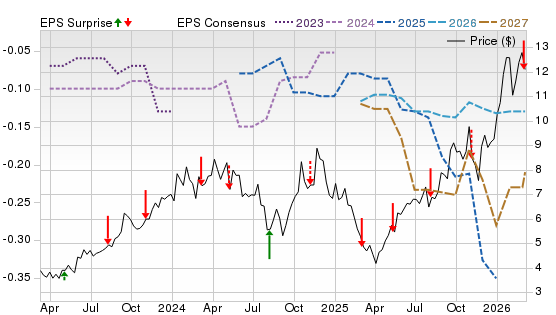
A Zacks Rank #2 is supportive, but F for Value and Growth and D for Momentum point to uneven forward signals. The chart shows 2026 and 2027 consensus drifting lower even as the price spikes, with mixed EPS surprises, suggesting the stock needs steadier estimate direction to sustain gains.
This is our short term rating system that serves as a timeliness indicator for stocks over the next 1 to 3 months. How good is it? See rankings and related performance below.
The Zacks Industry Rank assigns a rating to each of the 265 X (Expanded) Industries based on their average Zacks Rank.
An industry with a larger percentage of Zacks Rank #1's and #2's will have a better average Zacks Rank than one with a larger percentage of Zacks Rank #4's and #5's.
The industry with the best average Zacks Rank would be considered the top industry (1 out of 265), which would place it in the top 1% of Zacks Ranked Industries. The industry with the worst average Zacks Rank (265 out of 265) would place in the bottom 1%.
The Zacks Sector Rank assigns a rating to each of the 16 Sectors based on their average Zacks Rank.
A sector with a larger percentage of Zacks Rank #1's and #2's will have a better average Zacks Rank than one with a larger percentage of Zacks Rank #4's and #5's.
The sector with the best average Zacks Rank would be considered the top sector (1 out of 16), which would place it in the top 1% of Zacks Ranked Sectors. The sector with the worst average Zacks Rank (16 out of 16) would place in the bottom 1%.
The Style Scores are a complementary set of indicators to use alongside the Zacks Rank. It allows the user to better focus on the stocks that are the best fit for his or her personal trading style.
The scores are based on the trading styles of Value, Growth, and Momentum. There's also a VGM Score ('V' for Value, 'G' for Growth and 'M' for Momentum), which combines the weighted average of the individual style scores into one score.
Value ScoreA
Growth ScoreA
Momentum ScoreA
VGM ScoreA
Within each Score, stocks are graded into five groups: A, B, C, D and F. As you might remember from your school days, an A, is better than a B; a B is better than a C; a C is better than a D; and a D is better than an F.
As an investor, you want to buy stocks with the highest probability of success. That means you want to buy stocks with a Zacks Rank #1 or #2, Strong Buy or Buy, which also has a Score of an A or a B in your personal trading style.
Zacks Earnings ESP (Expected Surprise Prediction) looks to find companies that have recently seen positive earnings estimate revision activity. The idea is that more recent information is, generally speaking, more accurate and can be a better predictor of the future, which can give investors an advantage in earnings season.
The technique has proven to be very useful for finding positive surprises. In fact, when combining a Zacks Rank #3 or better and a positive Earnings ESP, stocks produced a positive surprise 70% of the time, while they also saw 28.3% annual returns on average, according to our 10 year backtest.
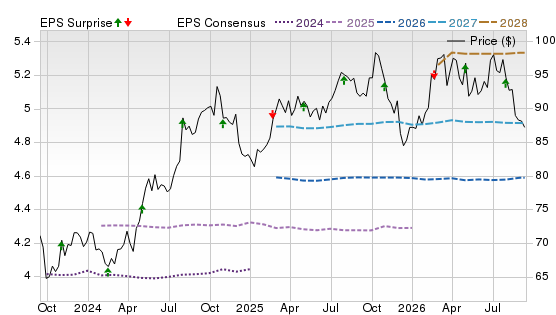
PG&E is a regulated California utility with nuclear exposure through Diablo Canyon, a major source of carbon-free baseload power. In Q1 2026, PG&E delivered a core EPS beat and reaffirmed full-year core EPS guidance, while highlighting growing data-center interconnection activity and continued wildfire-mitigation work. Diablo Canyon’s newly approved federal license renewal supports the reliability case and preserves a valuable zero-carbon asset as demand rises.
Potential Risks
Wildfire liability, equipment failures and regulation can pressure valuation and lift financing costs. Diablo Canyon still faces California policy and cost-recovery debates beyond 2030 despite the federal renewal.
Forecast
A Zacks Rank #2 with A for Value and Momentum and Growth B suggests favorable factors without a stretched setup. The chart shows 2026-2027 consensus roughly flat to slightly higher and a mixed surprise pattern, implying performance hinges on execution and regulatory outcomes more than estimate upgrades.
The Zacks Rank is a proprietary stock-rating model that uses trends in earnings estimate revisions and earnings-per-share (EPS) surprises to classify stocks into five groups: #1 (Strong Buy), #2 (Buy), #3 (Hold), #4 (Sell) and #5 (Strong Sell). The Zacks Rank is calculated through four primary factors related to earnings estimates: analysts' consensus on earnings estimate revisions, the magnitude of revision change, the upside potential and estimate surprise (or the degree in which earnings per share deviated from the previous quarter).
Zacks builds the data from 3,000 analysts at over 150 different brokerage firms. The average yearly gain for Zacks Rank #1 (Strong Buy) stocks is +23.62% per year from January, 1988, through June 2, 2025.
Selections for Best Nuclear Energy Stocks are based on the current top ranking stocks based on Zacks Indicator Score, Style Scores and fundamentals. All information is current as of market open, April 27, 2026.
Learn More About Nuclear Energy Stocks
What Are Nuclear Energy Stocks?
Nuclear energy stocks represent ownership in publicly traded companies involved in nuclear power generation, reactor engineering, fuel manufacturing, and related services. These companies form part of the broader clean-energy transition while offering diversification away from fossil fuels.
What Are Some Examples of Nuclear Energy Stocks?
Best Nuclear Reactor Technology Stocks
NuScale Power (SMR - Free Report ) – Leading developer of SMR technology with NRC-certified designs that are scalable for diverse power needs.
Oklo Inc. (OKLO - Free Report) – Focused on compact fast reactors and advanced fuel solutions that may serve both grid and industrial customers.
Best Nuclear Energy Utility Stocks
Constellation Energy (CEG - Free Report) – Major U.S. utility with extensive nuclear generation assets and recent federal support to restart legacy reactors.
Dominion Energy (D - Free Report) – Diversified utility operating nuclear plants alongside renewables and other generation sources.
Best Small Modular Reactor (SMR) Stocks
NuScale Power (SMR) – First mover in NRC-approved SMR designs intended for global deployment.
NANO Nuclear Energy (NNE - Free Report) – Targeting the micro-reactor niche with portable reactor designs for specialized applications. .
What Are the Benefits of Buying Nuclear Energy Stocks?
Access to baseload power generation supporting grid stability.
Exposure to long-term structural growth in clean energy demand.
Potential dividends from established utilities.
Diversification from traditional fossil fuel exposures.
What Are the Risks of Buying Nuclear Energy Stocks?
High capital intensity with long project timelines.
Regulatory and permitting uncertainties.
Public sentiment can affect policy and plant approvals.
Some technology stocks may not generate revenue for years.
Nuclear Energy Stocks vs Nuclear Energy ETFs
Investors seeking broader exposure with lower company-specific risk may prefer ETFs, which bundle multiple nuclear stocks — from uranium miners and utilities to reactor builders. Individual stocks can offer higher upside but come with greater volatility.
How Does Nuclear Energy Demand Affect Nuclear Stocks?
Strong demand for reliable electricity — especially from industrial users and data centers — typically increases utility earnings visibility and supports long-term contracts that benefit nuclear power producers.
Is Nuclear Energy Considered Clean Energy?
Nuclear power produces electricity with minimal greenhouse gas emissions during operation and is widely recognized in many clean energy frameworks, despite ongoing debates over waste management.
Are Nuclear Energy Stocks Good During Economic Uncertainty?
Utility-focused nuclear stocks often provide stable cash flows and dividends, acting as defensive assets in uncertain markets. Tech-heavy nuclear firms can be more cyclical and sensitive to investor sentiment.
Nuclear vs Uranium Stocks: What’s the Difference?
Nuclear energy stocks involve companies producing power or technology for reactors.
Uranium stocks focus on mining and commodity exposure to nuclear fuel prices.
Both benefit from overall nuclear sector growth, but they perform differently in response to market drivers.
Evaluating if Nuclear Energy Stocks Fit Your Investing Portfolio
How Does Uranium Price Affect Nuclear Energy Stocks?
Spikes in uranium pricing may increase fuel costs but can signal higher long-term nuclear demand, often bolstering related infrastructure investment.
Will Small Modular Reactors (SMRs) Increase Nuclear Stock Growth?
Commercial success for SMRs could open new market segments and accelerate capacity buildouts, potentially lifting shares of developers and their industrial partners.
How Will Government Policies Impact Nuclear Energy Companies?
Tax incentives, loan guarantees, and streamlined licensing improve nuclear project economics and can materially affect investor returns over the long term.
What Metrics Should I Evaluate When Picking Nuclear Stocks?
Assess balance-sheet strength, regulatory progress, contract pipelines, dividend history, and strategic partnerships that signal future growth potential.
How to Buy Nuclear Energy Stocks
How Do I Invest in Nuclear Energy Stocks?
You can buy shares of public companies through a brokerage platform. For stocks with higher volatility or lower liquidity, rigorous research is essential.
What Is the Easiest Way to Get Exposure to Nuclear Energy?
Nuclear-focused ETFs provide broad sector exposure without relying on the success of single companies.
Should I Buy Nuclear Stocks, Uranium Stocks, or Nuclear ETFs?
Choose based on your risk tolerance: individual nuclear stocks for targeted exposure, uranium stocks for commodity leverage, and ETFs for diversified sector participation.
Top Nuclear Energy ETFs to Invest In
VanEck Uranium+Nuclear ETF (NLR). Broad industry exposure across utilities, reactor tech, and fuel services.
Range Nuclear Renaissance ETF (NUKZ). Focused on companies positioned to benefit from the nuclear revival.
Managing Nuclear Energy Stocks
When Should I Sell Nuclear Energy Stocks?
Consider reducing positions after major overvaluation, project delays, or if fundamentals deteriorate relative to industry peers.
How Will Global Energy Transition Goals Affect My Nuclear Investments?
Global decarbonization targets and reliability concerns point to continued relevance for nuclear energy in balanced clean-energy portfolios.
Alternatives to Nuclear Energy Stocks
Are Nuclear Energy Stocks Too Risky?
Early-stage technology plays carry higher risk, but utilities with nuclear exposure tend to be more stable
Should I Invest in Renewable Energy Stocks Instead?
Renewables are expanding faster, but nuclear offers continuous baseload power, making it a complementary clean-energy asset.
Are Traditional Utility Stocks Safer Than Nuclear Stocks?
Traditional regulated utilities may be less volatile and provide dependable income, while nuclear stocks can offer greater thematic growth potential.