We use cookies to understand how you use our site and to improve your experience.
This includes personalizing content and advertising.
By pressing "Accept All" or closing out of this banner, you consent to the use of all cookies and similar technologies and the sharing of information they collect with third parties.
You can reject marketing cookies by pressing "Deny Optional," but we still use essential, performance, and functional cookies.
In addition, whether you "Accept All," Deny Optional," click the X or otherwise continue to use the site, you accept our Privacy Policy and Terms of Service, revised from time to time.
You are being directed to ZacksTrade, a division of LBMZ Securities and licensed broker-dealer. ZacksTrade and Zacks.com are separate companies. The web link between the two companies is not a solicitation or offer to invest in a particular security or type of security. ZacksTrade does not endorse or adopt any particular investment strategy, any analyst opinion/rating/report or any approach to evaluating individual securities.
If you wish to go to ZacksTrade, click OK. If you do not, click Cancel.
Global oil markets in 2026 are defined by a delicate balance of steady demand growth and geopolitical risk.
The sector performs best when prices are stable or gradually rising—not when volatility dominates.
Top oil stocks to buy today include TechnipFMC, Archrock and Eni S.p.A.
Oil stocks remain a core segment of the global energy market, offering investors exposure to commodity-driven cash flows, dividends, and inflation-sensitive assets. While the sector is inherently cyclical, years of disciplined capital spending, balance-sheet repair, and shareholder-friendly policies have reshaped oil investing into a more cash-return-focused story than in past booms.
Oil Stock Market Overview and Forecast
Global oil markets in 2026 are defined by a delicate balance of steady demand growth from emerging economies, measured supply from OPEC+ producers, and persistent geopolitical risk in key exporting regions. International energy data and U.S. inventory trends continue to show seasonal stockpile swings, underscoring how sensitive crude prices remain to short-term supply disruptions and macroeconomic shifts.
At the same time, U.S. shale output, once synonymous with rapid expansion, is growing more selectively, with producers emphasizing capital discipline over volume growth. As a result, most analysts expect oil prices to remain range-bound rather than surge dramatically, a backdrop that tends to favor companies with low production costs, resilient balance sheets, and consistent free cash flow over growth-at-any-cost drillers.
Is now a good time to invest in oil stocks?
Historically, the sector performs best when prices are stable or gradually rising—not when volatility dominates headlines. In 2026, oil stocks increasingly appeal to income-oriented and value-focused investors seeking durable dividends, share repurchases, and prudent capital allocation.
Below, we analyze and rank the best oil stocks using a blend of Zacks Rank signals, Style Scores, and fundamental metrics to identify compelling opportunities in today’s market.
This is our short term rating system that serves as a timeliness indicator for stocks over the next 1 to 3 months. How good is it? See rankings and related performance below.
The Zacks Industry Rank assigns a rating to each of the 265 X (Expanded) Industries based on their average Zacks Rank.
An industry with a larger percentage of Zacks Rank #1's and #2's will have a better average Zacks Rank than one with a larger percentage of Zacks Rank #4's and #5's.
The industry with the best average Zacks Rank would be considered the top industry (1 out of 265), which would place it in the top 1% of Zacks Ranked Industries. The industry with the worst average Zacks Rank (265 out of 265) would place in the bottom 1%.
The Zacks Sector Rank assigns a rating to each of the 16 Sectors based on their average Zacks Rank.
A sector with a larger percentage of Zacks Rank #1's and #2's will have a better average Zacks Rank than one with a larger percentage of Zacks Rank #4's and #5's.
The sector with the best average Zacks Rank would be considered the top sector (1 out of 16), which would place it in the top 1% of Zacks Ranked Sectors. The sector with the worst average Zacks Rank (16 out of 16) would place in the bottom 1%.
The Style Scores are a complementary set of indicators to use alongside the Zacks Rank. It allows the user to better focus on the stocks that are the best fit for his or her personal trading style.
The scores are based on the trading styles of Value, Growth, and Momentum. There's also a VGM Score ('V' for Value, 'G' for Growth and 'M' for Momentum), which combines the weighted average of the individual style scores into one score.
Value ScoreA
Growth ScoreA
Momentum ScoreA
VGM ScoreA
Within each Score, stocks are graded into five groups: A, B, C, D and F. As you might remember from your school days, an A, is better than a B; a B is better than a C; a C is better than a D; and a D is better than an F.
As an investor, you want to buy stocks with the highest probability of success. That means you want to buy stocks with a Zacks Rank #1 or #2, Strong Buy or Buy, which also has a Score of an A or a B in your personal trading style.
Zacks Earnings ESP (Expected Surprise Prediction) looks to find companies that have recently seen positive earnings estimate revision activity. The idea is that more recent information is, generally speaking, more accurate and can be a better predictor of the future, which can give investors an advantage in earnings season.
The technique has proven to be very useful for finding positive surprises. In fact, when combining a Zacks Rank #3 or better and a positive Earnings ESP, stocks produced a positive surprise 70% of the time, while they also saw 28.3% annual returns on average, according to our 10 year backtest.
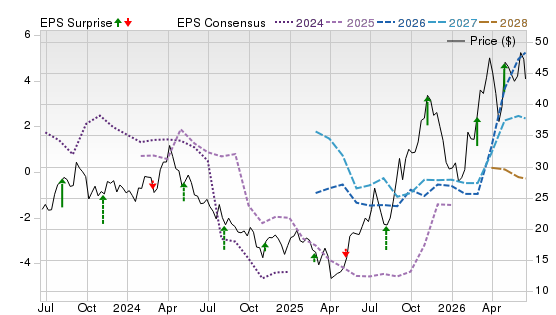
TechnipFMC plc provides subsea and surface technologies for offshore energy development. The company reported $2.3 billion in 4Q25 subsea orders within $2.6 billion inbound, supporting a $16.6 billion backlog and $440 million adjusted EBITDA.
Potential Risks
Potential downturns in offshore activity or project timing shifts could pressure results. Lower regional activity, vessel maintenance disruptions, or execution challenges may affect margins profitability.
Forecast
A Zacks Rank #1 (Strong Buy) signals rising earnings estimates, while a B Momentum score fits the clear price uptrend. The C Value score suggests the shares aren’t especially cheap on traditional metrics after the run, but the B Growth score points to a still-constructive earnings outlook versus peers if execution stays on track. The chart shows consensus EPS stepping higher into 2025–2027 as recent quarters skew to upside surprises, supportive of continued rerating if deliveries stay on track.
This is our short term rating system that serves as a timeliness indicator for stocks over the next 1 to 3 months. How good is it? See rankings and related performance below.
The Zacks Industry Rank assigns a rating to each of the 265 X (Expanded) Industries based on their average Zacks Rank.
An industry with a larger percentage of Zacks Rank #1's and #2's will have a better average Zacks Rank than one with a larger percentage of Zacks Rank #4's and #5's.
The industry with the best average Zacks Rank would be considered the top industry (1 out of 265), which would place it in the top 1% of Zacks Ranked Industries. The industry with the worst average Zacks Rank (265 out of 265) would place in the bottom 1%.
The Zacks Sector Rank assigns a rating to each of the 16 Sectors based on their average Zacks Rank.
A sector with a larger percentage of Zacks Rank #1's and #2's will have a better average Zacks Rank than one with a larger percentage of Zacks Rank #4's and #5's.
The sector with the best average Zacks Rank would be considered the top sector (1 out of 16), which would place it in the top 1% of Zacks Ranked Sectors. The sector with the worst average Zacks Rank (16 out of 16) would place in the bottom 1%.
The Style Scores are a complementary set of indicators to use alongside the Zacks Rank. It allows the user to better focus on the stocks that are the best fit for his or her personal trading style.
The scores are based on the trading styles of Value, Growth, and Momentum. There's also a VGM Score ('V' for Value, 'G' for Growth and 'M' for Momentum), which combines the weighted average of the individual style scores into one score.
Value ScoreA
Growth ScoreA
Momentum ScoreA
VGM ScoreA
Within each Score, stocks are graded into five groups: A, B, C, D and F. As you might remember from your school days, an A, is better than a B; a B is better than a C; a C is better than a D; and a D is better than an F.
As an investor, you want to buy stocks with the highest probability of success. That means you want to buy stocks with a Zacks Rank #1 or #2, Strong Buy or Buy, which also has a Score of an A or a B in your personal trading style.
Zacks Earnings ESP (Expected Surprise Prediction) looks to find companies that have recently seen positive earnings estimate revision activity. The idea is that more recent information is, generally speaking, more accurate and can be a better predictor of the future, which can give investors an advantage in earnings season.
The technique has proven to be very useful for finding positive surprises. In fact, when combining a Zacks Rank #3 or better and a positive Earnings ESP, stocks produced a positive surprise 70% of the time, while they also saw 28.3% annual returns on average, according to our 10 year backtest.
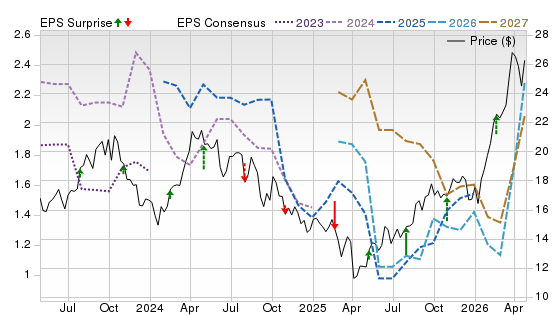
Archrock is a Houston-based natural gas compression company and a premier outsourced provider in the United States. Its must-run services, long-term fee-based contracts, diversified basin footprint and over 95% utilization support demand and growth investments.
Potential Risks
Results depend on oil and gas production activity. Capital-intensive compression equipment, debt obligations, and funding requirements for growth capital expenditures could pressure financial flexibility.
Forecast
A Zacks Rank #1 keeps the revisions backdrop constructive, even if the style grades aren’t perfectly aligned. A Value score of C suggests it isn’t priced like a bargain, a B Growth score supports a still-solid earnings profile, and a D Momentum score hints the stock’s recent trading action has been less consistent than the rank alone would suggest. The chart shows a steady climb in price and a rising EPS consensus path into 2026–2027, with more recent surprises leaning positive, supportive if guidance holds.
This is our short term rating system that serves as a timeliness indicator for stocks over the next 1 to 3 months. How good is it? See rankings and related performance below.
The Zacks Industry Rank assigns a rating to each of the 265 X (Expanded) Industries based on their average Zacks Rank.
An industry with a larger percentage of Zacks Rank #1's and #2's will have a better average Zacks Rank than one with a larger percentage of Zacks Rank #4's and #5's.
The industry with the best average Zacks Rank would be considered the top industry (1 out of 265), which would place it in the top 1% of Zacks Ranked Industries. The industry with the worst average Zacks Rank (265 out of 265) would place in the bottom 1%.
The Zacks Sector Rank assigns a rating to each of the 16 Sectors based on their average Zacks Rank.
A sector with a larger percentage of Zacks Rank #1's and #2's will have a better average Zacks Rank than one with a larger percentage of Zacks Rank #4's and #5's.
The sector with the best average Zacks Rank would be considered the top sector (1 out of 16), which would place it in the top 1% of Zacks Ranked Sectors. The sector with the worst average Zacks Rank (16 out of 16) would place in the bottom 1%.
The Style Scores are a complementary set of indicators to use alongside the Zacks Rank. It allows the user to better focus on the stocks that are the best fit for his or her personal trading style.
The scores are based on the trading styles of Value, Growth, and Momentum. There's also a VGM Score ('V' for Value, 'G' for Growth and 'M' for Momentum), which combines the weighted average of the individual style scores into one score.
Value ScoreA
Growth ScoreA
Momentum ScoreA
VGM ScoreA
Within each Score, stocks are graded into five groups: A, B, C, D and F. As you might remember from your school days, an A, is better than a B; a B is better than a C; a C is better than a D; and a D is better than an F.
As an investor, you want to buy stocks with the highest probability of success. That means you want to buy stocks with a Zacks Rank #1 or #2, Strong Buy or Buy, which also has a Score of an A or a B in your personal trading style.
Zacks Earnings ESP (Expected Surprise Prediction) looks to find companies that have recently seen positive earnings estimate revision activity. The idea is that more recent information is, generally speaking, more accurate and can be a better predictor of the future, which can give investors an advantage in earnings season.
The technique has proven to be very useful for finding positive surprises. In fact, when combining a Zacks Rank #3 or better and a positive Earnings ESP, stocks produced a positive surprise 70% of the time, while they also saw 28.3% annual returns on average, according to our 10 year backtest.
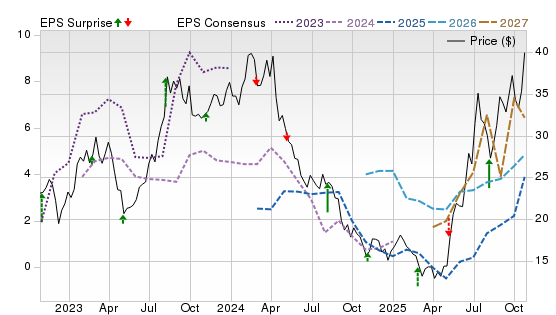
Vermilion Energy is a global natural gas producer with assets in Canada and Europe. The company’s repositioned gas portfolio delivers top-decile realized prices, long-life drilling inventory and excess free cash flow potential supporting shareholder returns.
Potential Risks
Commodity price volatility across natural gas and oil markets, foreign exchange shifts, and operational or regulatory uncertainties could affect production, cash flow, and financing costs materially.
Forecast
A Zacks Rank #1 implies upward estimate revisions, and the Value score of A suggests the market still discounts cyclicality. A Growth score of C points to a more measured earnings trajectory rather than a high-growth profile, while an F for the Momentum score signals weak recent trading action that can linger even when fundamentals are improving. The chart shows EPS estimates bottoming after earlier cuts, with a mixed surprise streak that has recently improved, pointing to stabilization rather than a straight-line rebound.
This is our short term rating system that serves as a timeliness indicator for stocks over the next 1 to 3 months. How good is it? See rankings and related performance below.
The Zacks Industry Rank assigns a rating to each of the 265 X (Expanded) Industries based on their average Zacks Rank.
An industry with a larger percentage of Zacks Rank #1's and #2's will have a better average Zacks Rank than one with a larger percentage of Zacks Rank #4's and #5's.
The industry with the best average Zacks Rank would be considered the top industry (1 out of 265), which would place it in the top 1% of Zacks Ranked Industries. The industry with the worst average Zacks Rank (265 out of 265) would place in the bottom 1%.
The Zacks Sector Rank assigns a rating to each of the 16 Sectors based on their average Zacks Rank.
A sector with a larger percentage of Zacks Rank #1's and #2's will have a better average Zacks Rank than one with a larger percentage of Zacks Rank #4's and #5's.
The sector with the best average Zacks Rank would be considered the top sector (1 out of 16), which would place it in the top 1% of Zacks Ranked Sectors. The sector with the worst average Zacks Rank (16 out of 16) would place in the bottom 1%.
The Style Scores are a complementary set of indicators to use alongside the Zacks Rank. It allows the user to better focus on the stocks that are the best fit for his or her personal trading style.
The scores are based on the trading styles of Value, Growth, and Momentum. There's also a VGM Score ('V' for Value, 'G' for Growth and 'M' for Momentum), which combines the weighted average of the individual style scores into one score.
Value ScoreA
Growth ScoreA
Momentum ScoreA
VGM ScoreA
Within each Score, stocks are graded into five groups: A, B, C, D and F. As you might remember from your school days, an A, is better than a B; a B is better than a C; a C is better than a D; and a D is better than an F.
As an investor, you want to buy stocks with the highest probability of success. That means you want to buy stocks with a Zacks Rank #1 or #2, Strong Buy or Buy, which also has a Score of an A or a B in your personal trading style.
Zacks Earnings ESP (Expected Surprise Prediction) looks to find companies that have recently seen positive earnings estimate revision activity. The idea is that more recent information is, generally speaking, more accurate and can be a better predictor of the future, which can give investors an advantage in earnings season.
The technique has proven to be very useful for finding positive surprises. In fact, when combining a Zacks Rank #3 or better and a positive Earnings ESP, stocks produced a positive surprise 70% of the time, while they also saw 28.3% annual returns on average, according to our 10 year backtest.
National Energy is a Middle East and North Africa-focused energy services provider offering more than 20 service lines across drilling, production, and intervention operations. The company operates in more than 16 countries with roughly 6,500 employees and serves more than 30 national and international oil companies.
Potential Risks
Operations remain tied to Middle East markets and may face disruptions from political disturbances, regulatory changes, economic conditions, or fluctuations in international currency and oil markets.
Forecast
A Zacks Rank #1 and a Momentum score of A back the sharp late-2025 breakout. The Value score of B suggests pricing is still reasonable, while a D Growth score points to a steadier, cycle-driven story rather than fast earnings acceleration. The chart shows EPS estimates resetting lower in 2025 before turning up for 2026–2027, while recent surprises have shifted back toward beats, supportive if cash conversion stays strong.
This is our short term rating system that serves as a timeliness indicator for stocks over the next 1 to 3 months. How good is it? See rankings and related performance below.
The Zacks Industry Rank assigns a rating to each of the 265 X (Expanded) Industries based on their average Zacks Rank.
An industry with a larger percentage of Zacks Rank #1's and #2's will have a better average Zacks Rank than one with a larger percentage of Zacks Rank #4's and #5's.
The industry with the best average Zacks Rank would be considered the top industry (1 out of 265), which would place it in the top 1% of Zacks Ranked Industries. The industry with the worst average Zacks Rank (265 out of 265) would place in the bottom 1%.
The Zacks Sector Rank assigns a rating to each of the 16 Sectors based on their average Zacks Rank.
A sector with a larger percentage of Zacks Rank #1's and #2's will have a better average Zacks Rank than one with a larger percentage of Zacks Rank #4's and #5's.
The sector with the best average Zacks Rank would be considered the top sector (1 out of 16), which would place it in the top 1% of Zacks Ranked Sectors. The sector with the worst average Zacks Rank (16 out of 16) would place in the bottom 1%.
The Style Scores are a complementary set of indicators to use alongside the Zacks Rank. It allows the user to better focus on the stocks that are the best fit for his or her personal trading style.
The scores are based on the trading styles of Value, Growth, and Momentum. There's also a VGM Score ('V' for Value, 'G' for Growth and 'M' for Momentum), which combines the weighted average of the individual style scores into one score.
Value ScoreA
Growth ScoreA
Momentum ScoreA
VGM ScoreA
Within each Score, stocks are graded into five groups: A, B, C, D and F. As you might remember from your school days, an A, is better than a B; a B is better than a C; a C is better than a D; and a D is better than an F.
As an investor, you want to buy stocks with the highest probability of success. That means you want to buy stocks with a Zacks Rank #1 or #2, Strong Buy or Buy, which also has a Score of an A or a B in your personal trading style.
Zacks Earnings ESP (Expected Surprise Prediction) looks to find companies that have recently seen positive earnings estimate revision activity. The idea is that more recent information is, generally speaking, more accurate and can be a better predictor of the future, which can give investors an advantage in earnings season.
The technique has proven to be very useful for finding positive surprises. In fact, when combining a Zacks Rank #3 or better and a positive Earnings ESP, stocks produced a positive surprise 70% of the time, while they also saw 28.3% annual returns on average, according to our 10 year backtest.
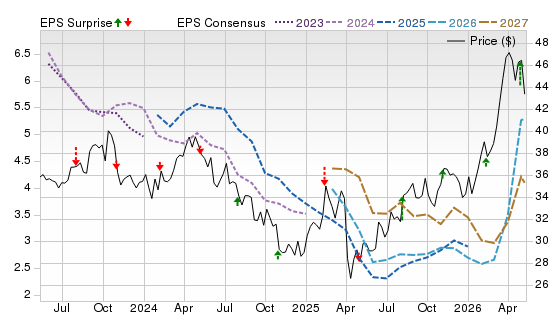
Eni is an integrated energy company focused on exploration, production, and energy transition businesses. In 2025, it delivered 4% underlying production growth, discovered 900 Mboe of resources, and achieved a 167% reserve replacement ratio, highlighting strong exploration success.
Potential Risks
Performance remains sensitive to commodity price realizations, which declined year over year for liquids and natural gas, while operational outcomes may vary with project execution and market conditions.
Forecast
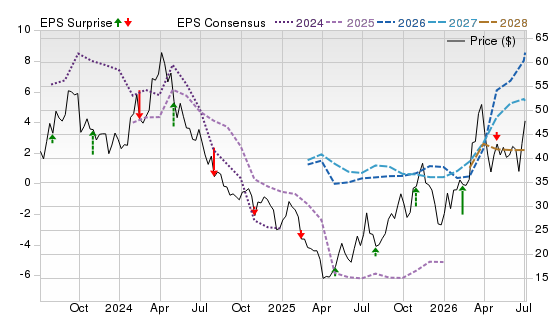
With a Zacks Rank #1 and an A Value score, the setup suggests favorable estimate revisions, while Style Scores of C for Growth and Momentum point to a steadier outlook with more moderate growth and less forceful recent price action. The chart shows the share price breaking higher even as the 2025–2026 EPS consensus reset lower versus 2024, and surprises have been mixed, implying the stock leans more on cash returns and execution than on a rising earnings curve.
The Zacks Rank is a proprietary stock-rating model that uses trends in earnings estimate revisions and earnings-per-share (EPS) surprises to classify stocks into five groups: #1 (Strong Buy), #2 (Buy), #3 (Hold), #4 (Sell) and #5 (Strong Sell). The Zacks Rank is calculated through four primary factors related to earnings estimates: analysts' consensus on earnings estimate revisions, the magnitude of revision change, the upside potential and estimate surprise (or the degree in which earnings per share deviated from the previous quarter).
Zacks builds the data from 3,000 analysts at over 150 different brokerage firms. The average yearly gain for Zacks Rank #1 (Strong Buy) stocks is +23.62% per year from January, 1988, through June 2, 2025.
Selections for Best Oil Stocks are based on the current top ranking stocks out of 343 stocks based on Zacks Indicator Score, Style Scores and fundamentals. All stocks have a daily trading volume of at least 100,000 shares and has a stock price of at least $5. All information is current as of market open, March 10, 2026.
Understanding Oil Stocks
Oil stocks represent companies involved in discovering, producing, transporting, refining, or selling petroleum products. Each segment reacts differently to oil price changes and economic cycles.
Types of oil stocks
Upstream oil stocks
Upstream companies focus on exploration and production (E&P). Their earnings are most sensitive to crude oil prices.
Midstream firms operate pipelines, storage terminals, and export facilities. Their revenues are often fee-based and less volatile than oil prices.
Examples: Enterprise Products Partners (EPD), Energy Transfer (ET), Kinder Morgan (KMI).
Downstream oil stocks
Downstream companies refine crude oil and sell fuels and petrochemicals. They benefit from strong refining margins rather than high crude prices.
Examples: Phillips 66 (PSX), Valero Energy (VLO), Marathon Petroleum (MPC).
Integrated oil stocks
Integrated majors operate across upstream, midstream, and downstream segments, offering diversification and scale.
Examples: Exxon Mobil (XOM), Chevron (CVX), BP (BP).
How do oil prices affect oil stocks?
Oil prices directly influence upstream profits, indirectly affect refiners through input costs, and have limited impact on midstream cash flows. Stock performance depends not just on oil prices but also on hedging, cost structure, and capital allocation.
Are oil stocks good long-term investments?
Oil stocks can be long-term holdings when purchased at reasonable valuations and paired with dividend reinvestment. However, long-term returns tend to trail high-growth sectors unless investors emphasize income and valuation discipline.
Are oil stocks good during inflation or recessions?
Oil stocks often perform well during inflationary periods because energy prices rise alongside costs. During recessions, demand declines can pressure oil prices, making defensive, dividend-paying companies more attractive than cyclical producers.
How volatile are oil stocks compared to other energy stocks?
Oil producers are generally more volatile than utilities or renewable energy stocks but less volatile than early-stage clean-energy firms. Integrated majors tend to be the least volatile within the oil sector. (See our picks for Best Energy Stocks to buy now.)
How will renewable energy trends affect oil stocks?
Renewables are a long-term competitive force, but oil demand remains supported by transportation, petrochemicals, and emerging markets. Many oil majors are investing selectively in low-carbon technologies to diversify future revenue streams.
How to Evaluate Oil Stocks
What metrics should I look at when evaluating oil stocks?
Key metrics include:
Free cash flow yield.
Break-even oil price.
Debt-to-equity ratio.
Reserve life index.
Dividend payout sustainability.
Capital return policies (dividends and buybacks).
How to analyze an oil company’s reserves and production growth?
Investors should examine proven reserves, reserve replacement ratios, and production growth guidance. Companies that replace reserves without excessive spending are generally higher quality.
How to Compare Oil Stocks
Oil stocks vs. natural gas stocks: What’s better?
Oil stocks offer broader global demand exposure, while natural gas stocks are often tied to regional pricing and LNG exports. Oil tends to be more geopolitically sensitive, while gas is more infrastructure-driven.
Oil stocks vs. energy ETFs: What’s better?
Individual oil stocks allow targeted exposure and income strategies, while energy ETFs provide diversification and lower company-specific risk.
Are oil ETFs better than buying individual oil stocks?
ETFs such as broad energy or oil-focused funds can reduce volatility, but they dilute high performers. Stock pickers may prefer individual companies with superior capital discipline.
How to Buy Oil Stocks
How do I invest in oil stocks?
Oil stocks can be purchased through standard brokerage accounts, retirement accounts, or dividend-focused portfolios. Investors should consider position sizing due to sector volatility.
What is the easiest way to get exposure to oil?
Energy ETFs or integrated oil majors offer simple exposure without the complexity of futures or leveraged products.
Should I buy oil stocks or trade crude oil futures?
Oil stocks are better suited for long-term investors, while crude futures are primarily for short-term traders and hedgers due to leverage and roll costs.
Oil Stocks Investment Strategy
How often should I rebalance an oil-focused portfolio?
Annual or semiannual rebalancing is typically sufficient unless oil prices experience extreme volatility.
When should I sell oil stocks?
Common sell signals include deteriorating balance sheets, dividend cuts, excessive capital spending, or valuations that exceed historical norms.
What are the tax implications of holding or selling oil stocks?
Dividends are generally taxable, while capital gains depend on holding period. Master limited partnerships (MLPs) may involve more complex tax reporting.
Alternatives to Oil Stocks
Should I invest in renewable energy stocks instead?
Renewable energy stocks offer growth potential but often lack the cash flow stability of oil majors. A blended energy portfolio can balance income and growth.
What are the safest alternatives to oil stocks?
Energy infrastructure companies, utilities, and diversified energy ETFs are typically less volatile alternatives for conservative investors.
Bottom Line
The best oil stocks in 2026 are not defined by aggressive production growth but by capital discipline, resilient cash flow, and shareholder returns. Investors who understand the cyclical nature of oil and focus on quality businesses can still find oil stocks to be a valuable part of a diversified portfolio.