We use cookies to understand how you use our site and to improve your experience.
This includes personalizing content and advertising.
By pressing "Accept All" or closing out of this banner, you consent to the use of all cookies and similar technologies and the sharing of information they collect with third parties.
You can reject marketing cookies by pressing "Deny Optional," but we still use essential, performance, and functional cookies.
In addition, whether you "Accept All," Deny Optional," click the X or otherwise continue to use the site, you accept our Privacy Policy and Terms of Service, revised from time to time.
You are being directed to ZacksTrade, a division of LBMZ Securities and licensed broker-dealer. ZacksTrade and Zacks.com are separate companies. The web link between the two companies is not a solicitation or offer to invest in a particular security or type of security. ZacksTrade does not endorse or adopt any particular investment strategy, any analyst opinion/rating/report or any approach to evaluating individual securities.
If you wish to go to ZacksTrade, click OK. If you do not, click Cancel.
Global military spending recently climbed to record levels, led by the United States, Europe and Asia.
Defense stocks, backed by longterm government contracts, can offer relatively stable revenue streams.
Some of the best defense stocks to buy now include BWX Technologies, Elbit Systems and FTAI Aviation Ltd.
With geopolitical tensions on the rise and defense budgets growing worldwide, aerospace and defense companies are increasingly on investors’ radars. Global military spending recently climbed to record levels, led by the United States, Europe, and key Asia Pacific nations, as governments modernize capabilities across air, sea, cyber and space. From traditional prime contractors to next-generation space systems developers, the defense sector offers a range of opportunities with different risk-reward profiles.
Below you will find a comprehensive look at the best defense stocks, how they behave across market cycles, and strategies for incorporating them into a portfolio.
Are defense stocks a good investment?
Defense firms often operate in oligopolistic markets, backed by long-term government contracts and multiyear procurement programs. This can translate into relatively stable revenue streams compared with purely commercial businesses, especially during economic slowdowns when federal spending tends to be more predictable than consumer demand.
Examples of leading public defense companies:
Lockheed Martin Corporation (LMT) – A top U.S. prime contractor on fighter jets, missiles, and advanced defense systems.
RTX Corporation (RTX) – Parent of Raytheon Technologies with strong positions in missile defense and avionics.
Northrop Grumman Corporation (NOC) – Major systems integrator known for stealth bombers and space systems.
General Dynamics Corporation (GD) – Builds combat vehicles, submarines, and defense electronics.
Boeing Company (BA) – Aerospace and defense manufacturer with significant military contracts.
Intuitive Machines, Inc. (LUNR) – Emerging space technology and services company working with NASA and U.S. national security space programs.
These names represent different segments — from legacy primes to newer space-oriented contractors.
Do defense stocks outperform the market?
Historically, defense equities have:
Delivered competitive long-term returns versus broad indexes like the S&P 500.
Shown resilience during geopolitical shocks when investors rotate toward “stable” government-linked revenue streams.
Benefited from increased defense appropriations and supplemental spending bills.
Still, performance varies by company and period.
Below, we analyze and rank the best defense stocks using a blend of Zacks Rank signals, Style Scores, and fundamental metrics to identify compelling opportunities in today’s market.
This is our short term rating system that serves as a timeliness indicator for stocks over the next 1 to 3 months. How good is it? See rankings and related performance below.
The Zacks Industry Rank assigns a rating to each of the 265 X (Expanded) Industries based on their average Zacks Rank.
An industry with a larger percentage of Zacks Rank #1's and #2's will have a better average Zacks Rank than one with a larger percentage of Zacks Rank #4's and #5's.
The industry with the best average Zacks Rank would be considered the top industry (1 out of 265), which would place it in the top 1% of Zacks Ranked Industries. The industry with the worst average Zacks Rank (265 out of 265) would place in the bottom 1%.
The Zacks Sector Rank assigns a rating to each of the 16 Sectors based on their average Zacks Rank.
A sector with a larger percentage of Zacks Rank #1's and #2's will have a better average Zacks Rank than one with a larger percentage of Zacks Rank #4's and #5's.
The sector with the best average Zacks Rank would be considered the top sector (1 out of 16), which would place it in the top 1% of Zacks Ranked Sectors. The sector with the worst average Zacks Rank (16 out of 16) would place in the bottom 1%.
The Style Scores are a complementary set of indicators to use alongside the Zacks Rank. It allows the user to better focus on the stocks that are the best fit for his or her personal trading style.
The scores are based on the trading styles of Value, Growth, and Momentum. There's also a VGM Score ('V' for Value, 'G' for Growth and 'M' for Momentum), which combines the weighted average of the individual style scores into one score.
Value ScoreA
Growth ScoreA
Momentum ScoreA
VGM ScoreA
Within each Score, stocks are graded into five groups: A, B, C, D and F. As you might remember from your school days, an A, is better than a B; a B is better than a C; a C is better than a D; and a D is better than an F.
As an investor, you want to buy stocks with the highest probability of success. That means you want to buy stocks with a Zacks Rank #1 or #2, Strong Buy or Buy, which also has a Score of an A or a B in your personal trading style.
Zacks Earnings ESP (Expected Surprise Prediction) looks to find companies that have recently seen positive earnings estimate revision activity. The idea is that more recent information is, generally speaking, more accurate and can be a better predictor of the future, which can give investors an advantage in earnings season.
The technique has proven to be very useful for finding positive surprises. In fact, when combining a Zacks Rank #3 or better and a positive Earnings ESP, stocks produced a positive surprise 70% of the time, while they also saw 28.3% annual returns on average, according to our 10 year backtest.
BWX Technologies is a specialized nuclear solutions provider serving defense, clean energy, and medical markets. The company benefits from decades of nuclear expertise, sole-source positions on mission-critical programs, and rare Category 1 licenses. Its long-cycle contracts and high barriers to entry support durable demand, while visibility into naval nuclear programs and expanding applications in microreactors underpin sustained growth.
Potential Risks
Dependence on government budgets and regulatory approvals can affect growth, while execution challenges, supply chain disruptions, and evolving demand for nuclear technologies may pressure performance.
Forecast
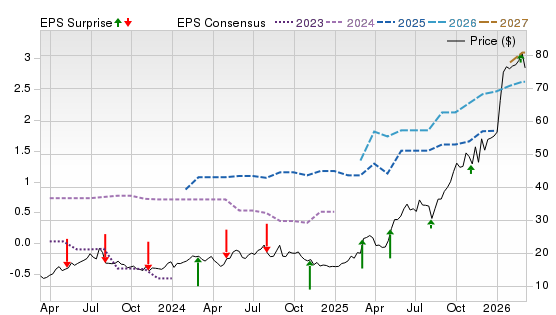
A Zacks Rank #1 (Strong Buy) signals the strongest near-term earnings-revision tailwind, while the F Value Score offsets solid B Growth and C Momentum by implying investors are already paying up. The Price, Consensus & EPS Surprise chart shows a clear uptrend in forward estimates into 2026–2027 alongside mostly positive recent surprises, consistent with the stock’s sharp 2025–2026 price climb.
This is our short term rating system that serves as a timeliness indicator for stocks over the next 1 to 3 months. How good is it? See rankings and related performance below.
The Zacks Industry Rank assigns a rating to each of the 265 X (Expanded) Industries based on their average Zacks Rank.
An industry with a larger percentage of Zacks Rank #1's and #2's will have a better average Zacks Rank than one with a larger percentage of Zacks Rank #4's and #5's.
The industry with the best average Zacks Rank would be considered the top industry (1 out of 265), which would place it in the top 1% of Zacks Ranked Industries. The industry with the worst average Zacks Rank (265 out of 265) would place in the bottom 1%.
The Zacks Sector Rank assigns a rating to each of the 16 Sectors based on their average Zacks Rank.
A sector with a larger percentage of Zacks Rank #1's and #2's will have a better average Zacks Rank than one with a larger percentage of Zacks Rank #4's and #5's.
The sector with the best average Zacks Rank would be considered the top sector (1 out of 16), which would place it in the top 1% of Zacks Ranked Sectors. The sector with the worst average Zacks Rank (16 out of 16) would place in the bottom 1%.
The Style Scores are a complementary set of indicators to use alongside the Zacks Rank. It allows the user to better focus on the stocks that are the best fit for his or her personal trading style.
The scores are based on the trading styles of Value, Growth, and Momentum. There's also a VGM Score ('V' for Value, 'G' for Growth and 'M' for Momentum), which combines the weighted average of the individual style scores into one score.
Value ScoreA
Growth ScoreA
Momentum ScoreA
VGM ScoreA
Within each Score, stocks are graded into five groups: A, B, C, D and F. As you might remember from your school days, an A, is better than a B; a B is better than a C; a C is better than a D; and a D is better than an F.
As an investor, you want to buy stocks with the highest probability of success. That means you want to buy stocks with a Zacks Rank #1 or #2, Strong Buy or Buy, which also has a Score of an A or a B in your personal trading style.
Zacks Earnings ESP (Expected Surprise Prediction) looks to find companies that have recently seen positive earnings estimate revision activity. The idea is that more recent information is, generally speaking, more accurate and can be a better predictor of the future, which can give investors an advantage in earnings season.
The technique has proven to be very useful for finding positive surprises. In fact, when combining a Zacks Rank #3 or better and a positive Earnings ESP, stocks produced a positive surprise 70% of the time, while they also saw 28.3% annual returns on average, according to our 10 year backtest.
Elbit Systems makes defense equipment like electronics, weapons and surveillance systems for countries worldwide. In 2025, it saw strong growth in sales and profits, backed by rising demand across multiple product areas. The company also generated high cash flows and secured more international orders, especially from Europe, giving it solid future growth visibility.
Potential Risks
Ongoing conflicts, supply issues and parts shortages may delay deliveries, while rapid production expansion and rising demand could create challenges in managing costs and execution.
Forecast
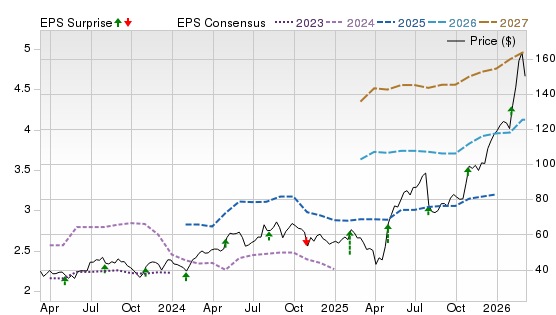
A Zacks Rank #2 (Buy) signals supportive earnings revisions. The A Growth Score and C Momentum suggest improving fundamentals with less consistent trading strength, while the D Value Score makes valuation sensitive. The chart shows higher 2026–2027 consensus tracks and more green than red surprises lately, matching the stock’s 2025–2026 surge.
This is our short term rating system that serves as a timeliness indicator for stocks over the next 1 to 3 months. How good is it? See rankings and related performance below.
The Zacks Industry Rank assigns a rating to each of the 265 X (Expanded) Industries based on their average Zacks Rank.
An industry with a larger percentage of Zacks Rank #1's and #2's will have a better average Zacks Rank than one with a larger percentage of Zacks Rank #4's and #5's.
The industry with the best average Zacks Rank would be considered the top industry (1 out of 265), which would place it in the top 1% of Zacks Ranked Industries. The industry with the worst average Zacks Rank (265 out of 265) would place in the bottom 1%.
The Zacks Sector Rank assigns a rating to each of the 16 Sectors based on their average Zacks Rank.
A sector with a larger percentage of Zacks Rank #1's and #2's will have a better average Zacks Rank than one with a larger percentage of Zacks Rank #4's and #5's.
The sector with the best average Zacks Rank would be considered the top sector (1 out of 16), which would place it in the top 1% of Zacks Ranked Sectors. The sector with the worst average Zacks Rank (16 out of 16) would place in the bottom 1%.
The Style Scores are a complementary set of indicators to use alongside the Zacks Rank. It allows the user to better focus on the stocks that are the best fit for his or her personal trading style.
The scores are based on the trading styles of Value, Growth, and Momentum. There's also a VGM Score ('V' for Value, 'G' for Growth and 'M' for Momentum), which combines the weighted average of the individual style scores into one score.
Value ScoreA
Growth ScoreA
Momentum ScoreA
VGM ScoreA
Within each Score, stocks are graded into five groups: A, B, C, D and F. As you might remember from your school days, an A, is better than a B; a B is better than a C; a C is better than a D; and a D is better than an F.
As an investor, you want to buy stocks with the highest probability of success. That means you want to buy stocks with a Zacks Rank #1 or #2, Strong Buy or Buy, which also has a Score of an A or a B in your personal trading style.
Zacks Earnings ESP (Expected Surprise Prediction) looks to find companies that have recently seen positive earnings estimate revision activity. The idea is that more recent information is, generally speaking, more accurate and can be a better predictor of the future, which can give investors an advantage in earnings season.
The technique has proven to be very useful for finding positive surprises. In fact, when combining a Zacks Rank #3 or better and a positive Earnings ESP, stocks produced a positive surprise 70% of the time, while they also saw 28.3% annual returns on average, according to our 10 year backtest.
StandardAero is a leading independent aeroengine aftermarket services provider with a global footprint spanning more than 50 facilities across six continents. The company benefits from long-term customer agreements covering roughly 77% of revenue and strong positions across key engine platforms, with 80% tied to leading market shares. Growth is supported by rising demand, constrained capacity and an aging fleet driving outsourcing trends.
Potential Risks
Exposure to cyclical aerospace demand, reliance on key customers, supply chain disruptions, regulatory compliance risks, and cost pressures from labor, materials and inflation could impact margins and operational performance.
Forecast
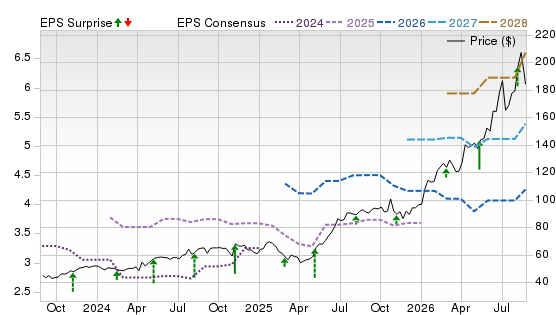
With a Zacks Rank #2, Style Scores of A for Growth and Momentum point to strong revision-driven upside, while the B Value score suggests only modest valuation support. The chart shows rising 2026–2027 consensus lines but mixed surprises and a jagged price, implying execution consistency is the key catalyst.
This is our short term rating system that serves as a timeliness indicator for stocks over the next 1 to 3 months. How good is it? See rankings and related performance below.
The Zacks Industry Rank assigns a rating to each of the 265 X (Expanded) Industries based on their average Zacks Rank.
An industry with a larger percentage of Zacks Rank #1's and #2's will have a better average Zacks Rank than one with a larger percentage of Zacks Rank #4's and #5's.
The industry with the best average Zacks Rank would be considered the top industry (1 out of 265), which would place it in the top 1% of Zacks Ranked Industries. The industry with the worst average Zacks Rank (265 out of 265) would place in the bottom 1%.
The Zacks Sector Rank assigns a rating to each of the 16 Sectors based on their average Zacks Rank.
A sector with a larger percentage of Zacks Rank #1's and #2's will have a better average Zacks Rank than one with a larger percentage of Zacks Rank #4's and #5's.
The sector with the best average Zacks Rank would be considered the top sector (1 out of 16), which would place it in the top 1% of Zacks Ranked Sectors. The sector with the worst average Zacks Rank (16 out of 16) would place in the bottom 1%.
The Style Scores are a complementary set of indicators to use alongside the Zacks Rank. It allows the user to better focus on the stocks that are the best fit for his or her personal trading style.
The scores are based on the trading styles of Value, Growth, and Momentum. There's also a VGM Score ('V' for Value, 'G' for Growth and 'M' for Momentum), which combines the weighted average of the individual style scores into one score.
Value ScoreA
Growth ScoreA
Momentum ScoreA
VGM ScoreA
Within each Score, stocks are graded into five groups: A, B, C, D and F. As you might remember from your school days, an A, is better than a B; a B is better than a C; a C is better than a D; and a D is better than an F.
As an investor, you want to buy stocks with the highest probability of success. That means you want to buy stocks with a Zacks Rank #1 or #2, Strong Buy or Buy, which also has a Score of an A or a B in your personal trading style.
Zacks Earnings ESP (Expected Surprise Prediction) looks to find companies that have recently seen positive earnings estimate revision activity. The idea is that more recent information is, generally speaking, more accurate and can be a better predictor of the future, which can give investors an advantage in earnings season.
The technique has proven to be very useful for finding positive surprises. In fact, when combining a Zacks Rank #3 or better and a positive Earnings ESP, stocks produced a positive surprise 70% of the time, while they also saw 28.3% annual returns on average, according to our 10 year backtest.
FTAI Aviation is an aerospace platform combining turbine technology with asset ownership across aviation and energy markets. Its aerospace products segment delivered strong earnings momentum, with adjusted EBITDA rising 76% year over year in 2025, supported by expanding MRE activity, growing module production and increasing global demand for cost-efficient engine maintenance solutions.
Potential Risks
Execution risks remain around scaling production, maintaining supply chain efficiency and funding growth initiatives, while reliance on MRE demand and ongoing capital deployment could expose earnings to shifts in market conditions.
Forecast
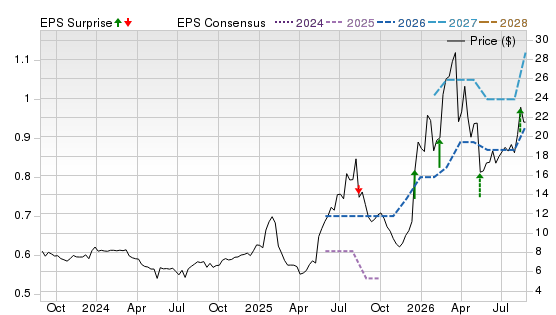
A Zacks Rank #2 is supportive, but D Value, F Growth, and B Momentum suggest a limited valuation cushion and only moderate trend strength. On the chart, forward consensus lines ratchet higher into 2026–2027 while EPS surprises alternate, matching a strong uptrend punctuated by sharp pullbacks.
This is our short term rating system that serves as a timeliness indicator for stocks over the next 1 to 3 months. How good is it? See rankings and related performance below.
The Zacks Industry Rank assigns a rating to each of the 265 X (Expanded) Industries based on their average Zacks Rank.
An industry with a larger percentage of Zacks Rank #1's and #2's will have a better average Zacks Rank than one with a larger percentage of Zacks Rank #4's and #5's.
The industry with the best average Zacks Rank would be considered the top industry (1 out of 265), which would place it in the top 1% of Zacks Ranked Industries. The industry with the worst average Zacks Rank (265 out of 265) would place in the bottom 1%.
The Zacks Sector Rank assigns a rating to each of the 16 Sectors based on their average Zacks Rank.
A sector with a larger percentage of Zacks Rank #1's and #2's will have a better average Zacks Rank than one with a larger percentage of Zacks Rank #4's and #5's.
The sector with the best average Zacks Rank would be considered the top sector (1 out of 16), which would place it in the top 1% of Zacks Ranked Sectors. The sector with the worst average Zacks Rank (16 out of 16) would place in the bottom 1%.
The Style Scores are a complementary set of indicators to use alongside the Zacks Rank. It allows the user to better focus on the stocks that are the best fit for his or her personal trading style.
The scores are based on the trading styles of Value, Growth, and Momentum. There's also a VGM Score ('V' for Value, 'G' for Growth and 'M' for Momentum), which combines the weighted average of the individual style scores into one score.
Value ScoreA
Growth ScoreA
Momentum ScoreA
VGM ScoreA
Within each Score, stocks are graded into five groups: A, B, C, D and F. As you might remember from your school days, an A, is better than a B; a B is better than a C; a C is better than a D; and a D is better than an F.
As an investor, you want to buy stocks with the highest probability of success. That means you want to buy stocks with a Zacks Rank #1 or #2, Strong Buy or Buy, which also has a Score of an A or a B in your personal trading style.
Zacks Earnings ESP (Expected Surprise Prediction) looks to find companies that have recently seen positive earnings estimate revision activity. The idea is that more recent information is, generally speaking, more accurate and can be a better predictor of the future, which can give investors an advantage in earnings season.
The technique has proven to be very useful for finding positive surprises. In fact, when combining a Zacks Rank #3 or better and a positive Earnings ESP, stocks produced a positive surprise 70% of the time, while they also saw 28.3% annual returns on average, according to our 10 year backtest.
Astronics makes key electrical and power systems used in aircraft and defense equipment. The company recently delivered strong results, with record revenue growth and better profitability driven by high demand and efficient operations. It also built a large order backlog, giving good visibility for future sales and steady growth across its aerospace and defense businesses.
Potential Risks
Its test systems business is still weak due to delayed defense orders, and profits depend on project timing, while external factors like tariffs and global uncertainties may increase costs.
Forecast
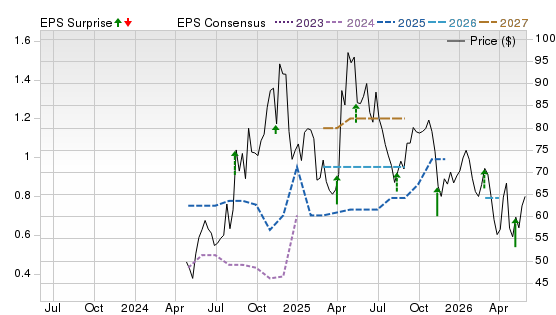
A Zacks Rank #2 signals supportive earnings revisions, but the D Value and F Momentum scores suggest the valuation cushion is limited and price action can be choppy even with an A Growth score. The chart shows higher 2026–2027 consensus lines and a shift from mostly red surprises in 2022–2023 to more green prints lately, matching the stock’s strong 2025–2026 advance.
The Zacks Rank is a proprietary stock-rating model that uses trends in earnings estimate revisions and earnings-per-share (EPS) surprises to classify stocks into five groups: #1 (Strong Buy), #2 (Buy), #3 (Hold), #4 (Sell) and #5 (Strong Sell). The Zacks Rank is calculated through four primary factors related to earnings estimates: analysts' consensus on earnings estimate revisions, the magnitude of revision change, the upside potential and estimate surprise (or the degree in which earnings per share deviated from the previous quarter).
Zacks builds the data from 3,000 analysts at over 150 different brokerage firms. The average yearly gain for Zacks Rank #1 (Strong Buy) stocks is +23.62% per year from January, 1988, through June 2, 2025.
Selections for Best Defense Stocks are based on the current top ranking stocks on Zacks Indicator Score, Style Scores and fundamentals. All stocks have a daily trading volume of at least 100,000 shares and has a stock price of at least $5. All information is current as of market open, April 22, 2026.
General questions about defense stocks
What are defense stocks?
Defense stocks are shares of companies that develop, manufacture, and maintain military equipment, weapons systems, aircraft, cybersecurity solutions, and space infrastructure. Many balance government contracts with commercial operations.
What are the benefits of investing in defense stocks?
Long government contract visibility: Multi-year deals provide predictable revenue.
High barriers to entry: Regulatory and technical requirements limit competition.
Dividend potential: Some established contractors pay steady dividends.
Strategic importance: Defense spending tends to continue even during economic slowdowns.
Why do defense stocks go up during wars or conflicts?
Periods of heightened conflict often signal future increases in military procurement, which can lead to higher demand for weapons systems, logistics support, and modernization programs.
How does government spending affect defense stocks?
Defense budgets are a primary revenue driver. In the U.S., annual appropriations well above $800 billion in recent years support sustained demand for existing and next-generation systems.
Contract awards, budget extensions, and supplemental funding directly add to order backlogs.
Are defense stocks recession-proof?
Defense equities are often considered defensive because government contracts are less sensitive to consumer demand cycles. During downturns, primes like Lockheed Martin and General Dynamics have often shown smaller drawdowns than highly cyclical groups, benefiting from ongoing military spending. However, they are still equities and can decline during broad market downturns.
Which defense stocks perform best during inflation?
Companies with strong pricing power or contracts with cost-inflation adjustments tend to weather inflation better. Digital solutions, avionics, and advanced systems providers often have more margin resilience than heavy industrial manufacturers.
Can defense stocks be held forever?
Some investors hold major primes indefinitely due to stable cash flows and dividends. However, long-term technological shifts and defense policy priorities should prompt periodic portfolio review.
Are defense stocks ethical investments?
Opinions vary. Some investors avoid defense due to ESG concerns, while others view national security as a necessary public good. Investment suitability depends on personal values.
Defense stocks: Comparative and Risk Evaluation
Defense stocks vs. defense ETFs: Which is better?
Individual stocks offer company-specific upside but carry higher singular risk. Defense-oriented ETFs like the iShares U.S. Aerospace & Defense ETF (ITA) or SPDR S&P Aerospace & Defense ETF (XAR) provide diversified exposure across contractors.
Are defense stocks risky?
Key risks include:
Budget cuts or changes in procurement priorities.
Delays or cancellations of major programs.
Export restrictions and geopolitical policy shifts.
Smaller or niche players often experience greater volatility than large primes.
How dependent are defense companies on government contracts?
Many defense firms derive a significant portion of revenue from government orders. Primes like Lockheed Martin or Northrop Grumman often see more than half of their revenues tied to defense budgets.
Emerging companies like Intuitive Machines also work with NASA and the Department of Defense for space and communications services.
Do defense stocks do well in bear markets?
Defense names sometimes outperform more cyclical sectors because their sales are backed by government spending. But they still may decline in broad market selloffs.
Should defense stocks be part of a diversified portfolio?
Including defense stocks can add diversification benefits — particularly exposure to government-linked revenue streams — but concentration risk should be managed with balance across other industries.
Defense stocks strategies and portfolio
How to select defense stocks
Consider:
Contract backlog and visibility.
Balance-sheet health.
Dividend track record and payout ratio.
Exposure to next-generation technologies (hypersonics, AI, space).
International sales mix.
Which defense stocks perform best during inflation?
Look for firms with adaptable pricing terms in contracts and strong margins, such as avionics and systems integrators.
When should I sell defense stocks?
Consider selling when:
Valuations become extended relative to fundamentals.
Major programs are canceled or reduced.
Strategic focus shifts away from core growth areas.
Can defense stocks be held forever?
Long-term holding can make sense for stable, dividend-paying defense giants, but technological disruption and budget evolutions necessitate regular reassessment.
Defense stocks alternatives
If you want exposure to security themes without individual defense equities, alternatives include:
Broad industrial or technology ETFs with defense allocations.
International aerospace firms.
Cybersecurity companies supporting military and government networks.
Space infrastructure players like Intuitive Machines, which bridge commercial exploration and national security roles.
Bottom line
The best defense stocks combine government-linked demand with innovation and balance-sheet strength. Large primes like Lockheed Martin, RTX, Northrop Grumman, and General Dynamics anchor many portfolios, while emerging space-defense companies such as Intuitive Machines offer higher growth potential.
Balancing diversification, valuation discipline, and strategic themes — from traditional weapons systems to space-enabled defense infrastructure — can help investors navigate this complex sector.