We use cookies to understand how you use our site and to improve your experience.
This includes personalizing content and advertising.
By pressing "Accept All" or closing out of this banner, you consent to the use of all cookies and similar technologies and the sharing of information they collect with third parties.
You can reject marketing cookies by pressing "Deny Optional," but we still use essential, performance, and functional cookies.
In addition, whether you "Accept All," Deny Optional," click the X or otherwise continue to use the site, you accept our Privacy Policy and Terms of Service, revised from time to time.
You are being directed to ZacksTrade, a division of LBMZ Securities and licensed broker-dealer. ZacksTrade and Zacks.com are separate companies. The web link between the two companies is not a solicitation or offer to invest in a particular security or type of security. ZacksTrade does not endorse or adopt any particular investment strategy, any analyst opinion/rating/report or any approach to evaluating individual securities.
If you wish to go to ZacksTrade, click OK. If you do not, click Cancel.
U.S. natural gas prices are often volatile, depending on weather, production and export demand.
The US. has seen rapid supply growth from major shale basins, keeping long-term pricing competitive.
The top natural gas stocks to buy now include Crescent Energy, Chord Energy and Permian Resources.
Natural gas remains one of the most closely followed energy commodities in global markets. It heats homes during winter cold spells, supports a growing liquefied natural gas (LNG) export market, and increasingly supplies electricity to power energy-intensive infrastructure such as data centers. For investors, the right natural gas stocks can offer income, cyclical upside tied to commodity prices, and participation in long term shifts in global energy supply.
Below, we examine and rank leading natural gas stocks using a blend of Zacks Rank signals, Style Scores, and core fundamental metrics to highlight companies that may offer durable opportunities for patient investors.
This is our short term rating system that serves as a timeliness indicator for stocks over the next 1 to 3 months. How good is it? See rankings and related performance below.
The Zacks Industry Rank assigns a rating to each of the 265 X (Expanded) Industries based on their average Zacks Rank.
An industry with a larger percentage of Zacks Rank #1's and #2's will have a better average Zacks Rank than one with a larger percentage of Zacks Rank #4's and #5's.
The industry with the best average Zacks Rank would be considered the top industry (1 out of 265), which would place it in the top 1% of Zacks Ranked Industries. The industry with the worst average Zacks Rank (265 out of 265) would place in the bottom 1%.
The Zacks Sector Rank assigns a rating to each of the 16 Sectors based on their average Zacks Rank.
A sector with a larger percentage of Zacks Rank #1's and #2's will have a better average Zacks Rank than one with a larger percentage of Zacks Rank #4's and #5's.
The sector with the best average Zacks Rank would be considered the top sector (1 out of 16), which would place it in the top 1% of Zacks Ranked Sectors. The sector with the worst average Zacks Rank (16 out of 16) would place in the bottom 1%.
The Style Scores are a complementary set of indicators to use alongside the Zacks Rank. It allows the user to better focus on the stocks that are the best fit for his or her personal trading style.
The scores are based on the trading styles of Value, Growth, and Momentum. There's also a VGM Score ('V' for Value, 'G' for Growth and 'M' for Momentum), which combines the weighted average of the individual style scores into one score.
Value ScoreA
Growth ScoreA
Momentum ScoreA
VGM ScoreA
Within each Score, stocks are graded into five groups: A, B, C, D and F. As you might remember from your school days, an A, is better than a B; a B is better than a C; a C is better than a D; and a D is better than an F.
As an investor, you want to buy stocks with the highest probability of success. That means you want to buy stocks with a Zacks Rank #1 or #2, Strong Buy or Buy, which also has a Score of an A or a B in your personal trading style.
Zacks Earnings ESP (Expected Surprise Prediction) looks to find companies that have recently seen positive earnings estimate revision activity. The idea is that more recent information is, generally speaking, more accurate and can be a better predictor of the future, which can give investors an advantage in earnings season.
The technique has proven to be very useful for finding positive surprises. In fact, when combining a Zacks Rank #3 or better and a positive Earnings ESP, stocks produced a positive surprise 70% of the time, while they also saw 28.3% annual returns on average, according to our 10 year backtest.
Crescent is a multi-basin E&P with meaningful natural gas and NGL exposure alongside oil. After closing the Vital Energy deal, management has leaned into its “free-cash-flow first” playbook, pairing integration and non-core divestitures with a measured development pace to fund deleveraging and returns through the cycle. Scale across the Eagle Ford, Permian, and Uinta, plus a growing minerals platform, supports steady development and balance-sheet flexibility.
Potential Risks
M&A and execution risks persist: synergy realization, performance across basins, and sustaining capital discipline growth. Convertible-note financing increases dilution and refinancing risk if markets tighten.
Forecast
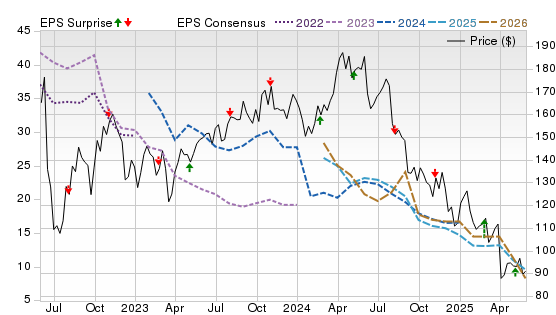
A Zacks Rank #1 (Strong Buy) with a Style Score of A for Value, D for Growth, and C for Momentum favors revision-driven upside, not a growth multiple. The Price, Consensus & EPS Surprise chart shows 2026 EPS expectations stabilizing after earlier cuts, with a recent beat, and the price has rebounded, suggesting execution and balance-sheet progress could pull estimates higher.
This is our short term rating system that serves as a timeliness indicator for stocks over the next 1 to 3 months. How good is it? See rankings and related performance below.
The Zacks Industry Rank assigns a rating to each of the 265 X (Expanded) Industries based on their average Zacks Rank.
An industry with a larger percentage of Zacks Rank #1's and #2's will have a better average Zacks Rank than one with a larger percentage of Zacks Rank #4's and #5's.
The industry with the best average Zacks Rank would be considered the top industry (1 out of 265), which would place it in the top 1% of Zacks Ranked Industries. The industry with the worst average Zacks Rank (265 out of 265) would place in the bottom 1%.
The Zacks Sector Rank assigns a rating to each of the 16 Sectors based on their average Zacks Rank.
A sector with a larger percentage of Zacks Rank #1's and #2's will have a better average Zacks Rank than one with a larger percentage of Zacks Rank #4's and #5's.
The sector with the best average Zacks Rank would be considered the top sector (1 out of 16), which would place it in the top 1% of Zacks Ranked Sectors. The sector with the worst average Zacks Rank (16 out of 16) would place in the bottom 1%.
The Style Scores are a complementary set of indicators to use alongside the Zacks Rank. It allows the user to better focus on the stocks that are the best fit for his or her personal trading style.
The scores are based on the trading styles of Value, Growth, and Momentum. There's also a VGM Score ('V' for Value, 'G' for Growth and 'M' for Momentum), which combines the weighted average of the individual style scores into one score.
Value ScoreA
Growth ScoreA
Momentum ScoreA
VGM ScoreA
Within each Score, stocks are graded into five groups: A, B, C, D and F. As you might remember from your school days, an A, is better than a B; a B is better than a C; a C is better than a D; and a D is better than an F.
As an investor, you want to buy stocks with the highest probability of success. That means you want to buy stocks with a Zacks Rank #1 or #2, Strong Buy or Buy, which also has a Score of an A or a B in your personal trading style.
Zacks Earnings ESP (Expected Surprise Prediction) looks to find companies that have recently seen positive earnings estimate revision activity. The idea is that more recent information is, generally speaking, more accurate and can be a better predictor of the future, which can give investors an advantage in earnings season.
The technique has proven to be very useful for finding positive surprises. In fact, when combining a Zacks Rank #3 or better and a positive Earnings ESP, stocks produced a positive surprise 70% of the time, while they also saw 28.3% annual returns on average, according to our 10 year backtest.
Chord is a Bakken-focused producer where associated natural gas and NGLs complement oil cash flow. Management issued a 2026 outlook that emphasized disciplined development, capital efficiency, and shareholder returns via its base dividend. In a mature basin, that free-cash-flow focus can appeal when investors prefer returns over growth.
Potential Risks
Bakken economics are highly commodity-sensitive, and gas realizations can swing with regional basis and midstream availability. Cost inflation, service tightness, or well-performance variability would pressure returns, and the stock can re-rate lower quickly when oil sentiment turns.
Forecast
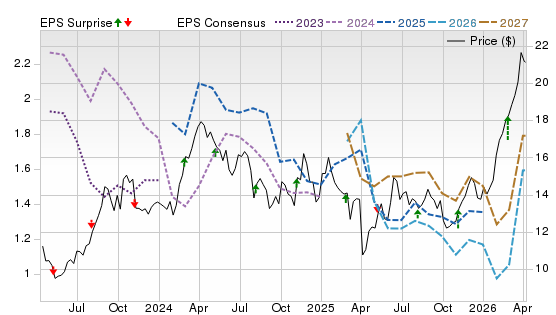
A Zacks Rank #1 with a B Value Score and an A Momentum Score signals favorable near-term revisions despite an F Growth Score. The chart shows 2026–2027 EPS consensus ticking up of late and a mixed surprise pattern, while the share price has bounced hard, implying the market is betting on stabilization before estimates follow.
This is our short term rating system that serves as a timeliness indicator for stocks over the next 1 to 3 months. How good is it? See rankings and related performance below.
The Zacks Industry Rank assigns a rating to each of the 265 X (Expanded) Industries based on their average Zacks Rank.
An industry with a larger percentage of Zacks Rank #1's and #2's will have a better average Zacks Rank than one with a larger percentage of Zacks Rank #4's and #5's.
The industry with the best average Zacks Rank would be considered the top industry (1 out of 265), which would place it in the top 1% of Zacks Ranked Industries. The industry with the worst average Zacks Rank (265 out of 265) would place in the bottom 1%.
The Zacks Sector Rank assigns a rating to each of the 16 Sectors based on their average Zacks Rank.
A sector with a larger percentage of Zacks Rank #1's and #2's will have a better average Zacks Rank than one with a larger percentage of Zacks Rank #4's and #5's.
The sector with the best average Zacks Rank would be considered the top sector (1 out of 16), which would place it in the top 1% of Zacks Ranked Sectors. The sector with the worst average Zacks Rank (16 out of 16) would place in the bottom 1%.
The Style Scores are a complementary set of indicators to use alongside the Zacks Rank. It allows the user to better focus on the stocks that are the best fit for his or her personal trading style.
The scores are based on the trading styles of Value, Growth, and Momentum. There's also a VGM Score ('V' for Value, 'G' for Growth and 'M' for Momentum), which combines the weighted average of the individual style scores into one score.
Value ScoreA
Growth ScoreA
Momentum ScoreA
VGM ScoreA
Within each Score, stocks are graded into five groups: A, B, C, D and F. As you might remember from your school days, an A, is better than a B; a B is better than a C; a C is better than a D; and a D is better than an F.
As an investor, you want to buy stocks with the highest probability of success. That means you want to buy stocks with a Zacks Rank #1 or #2, Strong Buy or Buy, which also has a Score of an A or a B in your personal trading style.
Zacks Earnings ESP (Expected Surprise Prediction) looks to find companies that have recently seen positive earnings estimate revision activity. The idea is that more recent information is, generally speaking, more accurate and can be a better predictor of the future, which can give investors an advantage in earnings season.
The technique has proven to be very useful for finding positive surprises. In fact, when combining a Zacks Rank #3 or better and a positive Earnings ESP, stocks produced a positive surprise 70% of the time, while they also saw 28.3% annual returns on average, according to our 10 year backtest.
Permian Resources is a Delaware Basin operator with substantial natural-gas and NGL volumes that broaden cash-flow leverage beyond oil. Its strategy has been steady: operational efficiency gains, bolt-on inventory additions, and a shareholder-friendly payout framework. Management’s 2026 plan targets improved capital efficiency and a higher base dividend.
Potential Risks
The model depends on oil and gas prices, and rapid consolidation can bring integration and inventory-quality risk. Service-cost inflation or takeaway constraints could erode netbacks, while higher activity could test capital discipline.
Forecast
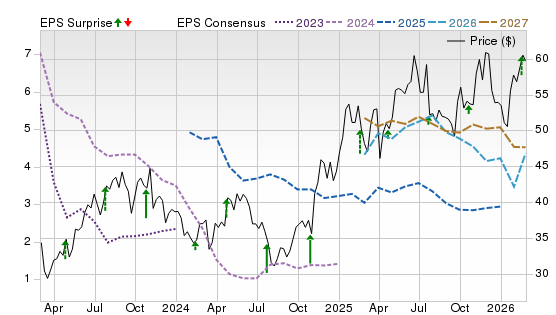
A Zacks Rank #1 plus an A Momentum Score and VGM of C point to supportive revisions even if Value Score is only C. On the chart, 2026–2027 EPS estimates drifted down through 2025, then started turning higher into 2026 as recent quarters skew toward beats, while the stock has broken out, often a setup for further upgrades if execution holds.
This is our short term rating system that serves as a timeliness indicator for stocks over the next 1 to 3 months. How good is it? See rankings and related performance below.
The Zacks Industry Rank assigns a rating to each of the 265 X (Expanded) Industries based on their average Zacks Rank.
An industry with a larger percentage of Zacks Rank #1's and #2's will have a better average Zacks Rank than one with a larger percentage of Zacks Rank #4's and #5's.
The industry with the best average Zacks Rank would be considered the top industry (1 out of 265), which would place it in the top 1% of Zacks Ranked Industries. The industry with the worst average Zacks Rank (265 out of 265) would place in the bottom 1%.
The Zacks Sector Rank assigns a rating to each of the 16 Sectors based on their average Zacks Rank.
A sector with a larger percentage of Zacks Rank #1's and #2's will have a better average Zacks Rank than one with a larger percentage of Zacks Rank #4's and #5's.
The sector with the best average Zacks Rank would be considered the top sector (1 out of 16), which would place it in the top 1% of Zacks Ranked Sectors. The sector with the worst average Zacks Rank (16 out of 16) would place in the bottom 1%.
The Style Scores are a complementary set of indicators to use alongside the Zacks Rank. It allows the user to better focus on the stocks that are the best fit for his or her personal trading style.
The scores are based on the trading styles of Value, Growth, and Momentum. There's also a VGM Score ('V' for Value, 'G' for Growth and 'M' for Momentum), which combines the weighted average of the individual style scores into one score.
Value ScoreA
Growth ScoreA
Momentum ScoreA
VGM ScoreA
Within each Score, stocks are graded into five groups: A, B, C, D and F. As you might remember from your school days, an A, is better than a B; a B is better than a C; a C is better than a D; and a D is better than an F.
As an investor, you want to buy stocks with the highest probability of success. That means you want to buy stocks with a Zacks Rank #1 or #2, Strong Buy or Buy, which also has a Score of an A or a B in your personal trading style.
Zacks Earnings ESP (Expected Surprise Prediction) looks to find companies that have recently seen positive earnings estimate revision activity. The idea is that more recent information is, generally speaking, more accurate and can be a better predictor of the future, which can give investors an advantage in earnings season.
The technique has proven to be very useful for finding positive surprises. In fact, when combining a Zacks Rank #3 or better and a positive Earnings ESP, stocks produced a positive surprise 70% of the time, while they also saw 28.3% annual returns on average, according to our 10 year backtest.
EQT is a top U.S. natural-gas producer, giving it direct leverage to Appalachian pricing and LNG-linked demand. Beyond production scale, EQT has leaned into integration and market access, highlighting marketing optimization, efficiency gains, and expanded Mountain Valley Pipeline ownership that can improve realizations and reduce bottlenecks.
Potential Risks
Pure-play gas exposure cuts both ways: a warm winter or oversupply can pressure realized prices and cash flow, and high debt amplifies downturns. Regulatory and project risks around midstream access can also weigh on sentiment.
Forecast
A Zacks Rank #1 is tempered by Style Scores of C for Value and D for Growth and Momentum, so the signal leans on revisions. The chart shows 2026–2027 EPS estimates flat-to-slightly up and with frequent modest beats, while the stock has surged. So sustained upside likely needs estimate upgrades to catch up with improved realizations and gas pricing.
This is our short term rating system that serves as a timeliness indicator for stocks over the next 1 to 3 months. How good is it? See rankings and related performance below.
The Zacks Industry Rank assigns a rating to each of the 265 X (Expanded) Industries based on their average Zacks Rank.
An industry with a larger percentage of Zacks Rank #1's and #2's will have a better average Zacks Rank than one with a larger percentage of Zacks Rank #4's and #5's.
The industry with the best average Zacks Rank would be considered the top industry (1 out of 265), which would place it in the top 1% of Zacks Ranked Industries. The industry with the worst average Zacks Rank (265 out of 265) would place in the bottom 1%.
The Zacks Sector Rank assigns a rating to each of the 16 Sectors based on their average Zacks Rank.
A sector with a larger percentage of Zacks Rank #1's and #2's will have a better average Zacks Rank than one with a larger percentage of Zacks Rank #4's and #5's.
The sector with the best average Zacks Rank would be considered the top sector (1 out of 16), which would place it in the top 1% of Zacks Ranked Sectors. The sector with the worst average Zacks Rank (16 out of 16) would place in the bottom 1%.
The Style Scores are a complementary set of indicators to use alongside the Zacks Rank. It allows the user to better focus on the stocks that are the best fit for his or her personal trading style.
The scores are based on the trading styles of Value, Growth, and Momentum. There's also a VGM Score ('V' for Value, 'G' for Growth and 'M' for Momentum), which combines the weighted average of the individual style scores into one score.
Value ScoreA
Growth ScoreA
Momentum ScoreA
VGM ScoreA
Within each Score, stocks are graded into five groups: A, B, C, D and F. As you might remember from your school days, an A, is better than a B; a B is better than a C; a C is better than a D; and a D is better than an F.
As an investor, you want to buy stocks with the highest probability of success. That means you want to buy stocks with a Zacks Rank #1 or #2, Strong Buy or Buy, which also has a Score of an A or a B in your personal trading style.
Zacks Earnings ESP (Expected Surprise Prediction) looks to find companies that have recently seen positive earnings estimate revision activity. The idea is that more recent information is, generally speaking, more accurate and can be a better predictor of the future, which can give investors an advantage in earnings season.
The technique has proven to be very useful for finding positive surprises. In fact, when combining a Zacks Rank #3 or better and a positive Earnings ESP, stocks produced a positive surprise 70% of the time, while they also saw 28.3% annual returns on average, according to our 10 year backtest.
Vermilion Energy is a diversified E&P with heavy natural-gas exposure in Canada and Europe, and 2026 guidance implies about 70% gas output. In the latest reported quarter, VET’s production exceeded guidance, and management pointed to robust fund flows from operations, enabling debt reduction and supporting its dividend plan as annual production hit a record.
Potential Risks
Commodity and FX volatility can still swamp fundamentals, and European permitting or regulatory shifts can delay projects. Leverage and multi-basin execution risk mean cost inflation or downtime could quickly pressure cash returns.
Forecast
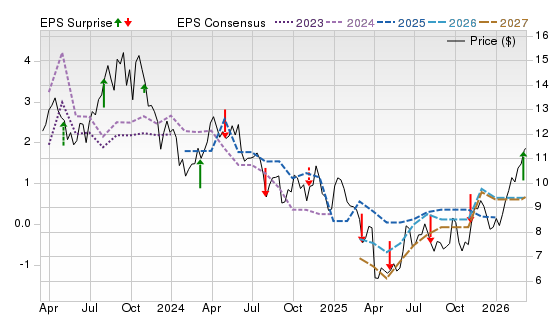
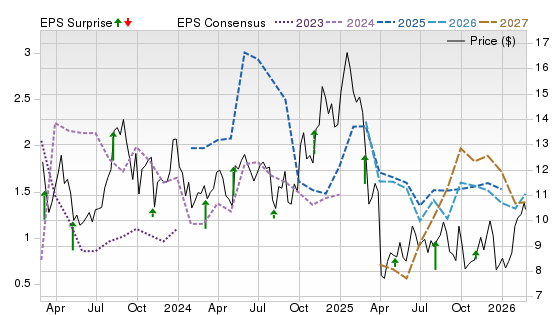
A Zacks Rank #1 with a Value B, Growth C, and Momentum B Scores signals favorable revisions and improving trading momentum. The chart shows EPS estimates stabilizing and edging higher into 2026–2027; surprises were choppy, but recent quarters and the share price turn suggest improving sentiment.
The Zacks Rank is a proprietary stock-rating model that uses trends in earnings estimate revisions and earnings-per-share (EPS) surprises to classify stocks into five groups: #1 (Strong Buy), #2 (Buy), #3 (Hold), #4 (Sell) and #5 (Strong Sell). The Zacks Rank is calculated through four primary factors related to earnings estimates: analysts' consensus on earnings estimate revisions, the magnitude of revision change, the upside potential and estimate surprise (or the degree in which earnings per share deviated from the previous quarter).
Zacks builds the data from 3,000 analysts at over 150 different brokerage firms. The average yearly gain for Zacks Rank #1 (Strong Buy) stocks is +23.62% per year from January, 1988, through June 2, 2025.
Selections for Best Natural Gas Stocks are based on the current top ranking stocks based on Zacks Indicator Score, Style Scores and fundamentals. All stocks have a daily trading volume of at least 100,000 shares and have a stock price of at least $5. All information is current as of market open, April 7, 2026.
Natural Gas Stock Market Overview and Forecast
U.S. natural gas prices have historically been volatile, responding quickly to changes in weather, production levels, and export demand. According to the U.S. Energy Information Administration (EIA), rapid supply growth from major shale basins such as the Marcellus and Permian has helped keep long-term pricing competitive. At the same time, the rise of LNG exports has introduced a powerful structural demand driver, increasingly linking U.S. prices to global energy markets.
The benchmark Henry Hub natural gas price, tracked by Trading Economics, has moved through pronounced cycles over the past decade. Periods of oversupply have pressured prices, while cold winters, infrastructure constraints, or export disruptions have triggered sharp rallies.
LNG export capacity continues to expand, positioning the United States as a key supplier to Europe and Asia. Among the companies shaping this trend are:
Cheniere Energy (LNG) – The largest U.S. LNG exporter, backed by long-term international contracts.
Sempra (SRE) – Which is developing LNG export terminals through its Sempra Infrastructure platform.
Meanwhile, major producers have adjusted drilling activity in response to price signals, helping moderate supply during downturns. Key players include:
EQT Corporation (EQT) – The largest U.S. natural gas producer.
Antero Resources (AR) – Leading Appalachian Basin producer with meaningful natural gas liquids exposure.
Comstock Resources (CRK) – Which is heavily leveraged to Haynesville gas near Gulf Coast LNG facilities.
Is now a good time to invest in natural gas stocks?
Natural gas investing often depends more on timing than many other sectors. Periods of low prices can create opportunities in financially disciplined producers with low production costs and manageable debt.
Investors should monitor several key indicators:
Storage levels (EIA weekly reports).
Rig counts and production trends.
LNG export volumes.
Seasonal weather forecasts.
When production growth slows and export demand strengthens, natural gas equities have historically shown the ability to outperform.
General Questions about Natural Gas Stocks
What are the benefits of buying natural gas stocks?
Exposure to a critical fuel source. Gas remains essential for electricity generation and industrial use.
LNG export growth. U.S. exports have structurally increased global demand.
Dividend potential. Midstream operators such as Kinder Morgan (KMI) and Williams Companies (WMB) offer income-focused exposure.
Cyclical upside. Gas producers can see rapid earnings expansion when prices spike.
What are the risks of buying natural gas stocks?
Commodity price volatility.
Weather dependency (mild winters hurt demand).
Regulatory and environmental pressures.
High leverage in some exploration and production companies.
Natural gas producer stocks vs. pipeline stocks: which is better?
Producers (EQT, AR, CRK): Higher upside when prices rise, but more volatile.
Midstream/pipeline (KMI, WMB): Fee-based contracts provide steadier cash flow and dividends.
Income-focused investors often prefer pipelines. Growth-oriented investors may favor producers.
What’s the outlook for natural gas stocks if prices rise?
Producers typically see expanding margins and cash flow during price rallies. Companies with low breakeven costs, like EQT, tend to benefit most. Pipeline operators may see incremental volume growth but are less sensitive to price spikes.
How do natural gas stock prices correlate with commodity prices?
Producer stocks generally move in tandem with natural gas prices. However, hedging programs can mute the impact. Midstream stocks often correlate more with volume growth than spot prices.
Natural gas stocks vs natural gas ETFs
Individual stocks offer targeted exposure and dividend potential. ETFs provide diversification. Examples include:
United States Natural Gas Fund (UNG) – Tracks natural gas futures.
Alerian MLP ETF (AMLP) – Focused on midstream MLPs.
ETFs reduce company-specific risk but may dilute upside.
What factors should I consider before buying natural gas stocks?
How important is free cash flow for natural gas companies?
Free cash flow is critical. Companies that generate excess cash during strong pricing cycles can:
Pay dividends.
Reduce debt.
Repurchase shares.
For example, Williams Companies emphasizes steady distributable cash flow tied to long-term contracts.
What debt levels are considered risky for gas producers?
High leverage magnifies downside risk when prices fall. Investors often monitor:
Net debt-to-EBITDA ratios.
Interest coverage.
Debt maturity schedules.
Producers operating near 3.0x–4.0x leverage can face pressure during downturns.
How do hedging strategies affect natural gas stock performance?
Hedging locks in future prices. This reduces volatility but may limit upside during rallies. Companies that hedge aggressively may lag during sharp commodity spikes.
Strategy and Portfolio Building with Natural Gas Stocks
Are natural gas stocks suitable for beginners?
They can be — if investors understand commodity cycles. Midstream dividend stocks may be more beginner-friendly than highly leveraged producers.
What natural gas stocks are good for long-term investing?
Long-term candidates often include:
Cheniere Energy (LNG) – Long-term LNG export contracts.
Williams Companies (WMB) – Extensive U.S. pipeline network.
Kinder Morgan (KMI) – Diversified gas infrastructure footprint.
These companies benefit from structural LNG demand growth rather than short-term weather swings.
How do natural gas stocks fit into an energy portfolio?
Natural gas can balance oil-heavy portfolios. Gas demand tends to be driven more by electricity and heating than transportation. Combining oil majors with gas-focused names adds diversification across commodities.
What are common mistakes investors make with natural gas stocks?
Buying after price spikes.
Ignoring balance sheet risk.
Overestimating short-term weather events.
Confusing LNG infrastructure stocks with upstream producers.
Should investors time the natural gas market or dollar-cost average?
Because natural gas is highly cyclical, dollar-cost averaging can reduce timing risk. However, experienced investors sometimes increase exposure during periods of low prices and production cutbacks.
What are the alternatives if you’re bearish on natural gas prices?
Focus on integrated majors with diversified revenue streams.
Invest in midstream companies less sensitive to price swings.
Allocate to renewable energy or utility stocks instead.
Bottom Line
The best natural gas stocks combine disciplined balance sheets, strong free cash flow, and exposure to long-term LNG export growth. Companies like EQT, Cheniere Energy, and Williams Companies illustrate different ways to gain exposure — from pure production leverage to fee-based infrastructure income.
As always, natural gas investing requires attention to commodity cycles, storage data, and global demand trends. For investors willing to tolerate volatility, the sector can offer both income and upside potential in an evolving global energy market.




 View the Zacks #1 Rank List


 Strong Buy